Booking choice: The flagship telescope tour, from $127 per person. Check dates Tour details
Winter is the easy season for an early night under the stars. Darkness comes early, so tours start at 7:30 pm instead of 9 or 10:30 in summer, and kids can come along without a midnight finish.
The trade-off is the cold. Sedona sits in the high desert, and winter nights drop to around freezing. This post covers the start times, the temperatures, the planets for winter 2026-27 and what each tour lends you to stay warm.
The quick answer
From November to April the flagship tour starts at 7:30 and 9 pm. Average lows are about 31°F in December and January. Saturn is in the evening sky after its October 4 opposition, and Jupiter reaches opposition on February 11, 2027. Dress in layers: the flagship lends parkas and blankets, and the UFO tour runs heaters in winter.
What time do Sedona stargazing tours start in winter?
The flagship tour starts at 7:30 pm and 9 pm from November to April. The star story tour starts at 7:30 pm, and the private night hike picks up at 6:45 pm.
The times below come from the flagship operator's site and the Viator listings. Operators can shift a start on the day for weather or sky events, and the UFO tour notes that its times move with sunset.
| Tour | Winter start | Length |
|---|---|---|
| Flagship telescope tour | 7:30 pm or 9 pm (Nov to Apr) | 1 h 15 min |
| Small-group telescopes | Sent with directions | 1 h 15 min |
| Star story tour | 7:30 pm | 2 h 5 min |
| Private night hike | 6:45 pm pickup | 4 hours |
| UFO night tour | Moves with sunset; check in 30 min early | 1 h 45 min |
How cold is Sedona at night in winter?
Around freezing. Average lows are about 31°F in December and January, and in the 30s in November, February and March.
These are long-term averages from the Western Regional Climate Center Sedona station (records 1943 to 2010). Nights cool fast after sunset, and you spend a tour standing or sitting still, which feels colder than the number.
| Month | Average high | Average low | Average precipitation |
|---|---|---|---|
| November | 65°F | 38°F | 1.33 in |
| December | 57°F | 31°F | 1.65 in |
| January | 56°F | 31°F | 2.03 in |
| February | 60°F | 33°F | 1.86 in |
| March | 65°F | 37°F | 1.96 in |
Which planets can you see from Sedona this winter?
Saturn in the evening through the autumn and early winter, and Jupiter, which reaches opposition on February 11, 2027 and rises at sunset.
Saturn reached opposition on October 4, 2026, so it is up in the evening this autumn and sinks lower in the west as winter goes on. Its rings are tilted only 7.5 degrees this year: narrow, but clear in a good telescope. Book an evening telescope tour in October or November to catch it high.
Jupiter is the winter planet. Earth passes between it and the sun on February 11, 2027, when it rises in the east as the sun sets and stays up all night. From late January to March, a telescope shows its cloud belts and four bright moons. Guests on both telescope tours report Saturn's rings, and one small-group guest saw Jupiter and four of its moons.
Large GPS telescopes and astronomers who aim at the planets first. Parkas and blankets are on loan.
Explore the flagship telescope tour Tour detailsWhich Sedona tours keep you warm in winter?
The flagship lends parka jackets and blankets. The UFO tour runs heaters in winter, and guests on the star story and small-group tours report blankets on the chairs.
- Flagship telescope tour: blankets and parka jackets are in the inclusions, with chairs between telescope turns.
- Small-group telescopes: guests report a heavy blanket on every chair, and one January guest was glad of it.
- Star story tour: chairs and blankets are included; guests mention hand warmers on cold nights.
- UFO night tour: heaters in winter, but guests report lots of standing.
Whatever you book, bring a hat, gloves and warm shoes. Our what to wear for stargazing in Sedona guide has the full list.
Is winter a good time for stargazing in Sedona?
Yes, for dark early evenings and planets. Clouds are the risk: December to March bring more rain on average than October and November.
The WRCC averages show 1.65 to 2.03 inches a month from December to March, against 1.33 to 1.42 in October and November. Winter storms bring cloudy nights, and cloud cancels tours. Viator offers a new date or a full refund when the operator cancels for weather, and every tour on this site has free cancellation up to 24 hours before.
Combine this with our moon calendar for 2026-27 and the Geminid meteor shower on December 13 to 14, and plan a night in the first week of December, early January or early February.
Winter tours start at 7:30 pm. Check your dates, with free cancellation up to 24 hours before.
Check dates for the flagship telescope tourFrequently asked questions
What time do stargazing tours start in Sedona in winter?
The flagship tour starts at 7:30 pm and 9 pm from November to April. The star story tour starts at 7:30 pm.
How cold does it get at night in Sedona in winter?
Average lows are about 31°F in December and January, close to freezing, and slightly warmer in November and March.
Can you see Jupiter from Sedona in winter 2026-27?
Yes. Jupiter reaches opposition on February 11, 2027, rising at sunset and staying up all night.
Do Sedona stargazing tours provide blankets?
Yes on the flagship (blankets and parkas) and the star story tour. Guests on the small-group telescope tour report blankets on the chairs.
Ready to book
Choose your night
Free cancellation up to 24 hours before on every option. Prices are from-prices in USD and move with the season.
Sedona Stargazing Tour
- Constellation overview with a laser pointer
- Turns at large GPS auto-positioning telescopes: planets, galaxies, nebulas, star clusters
- Wide-view binoculars and a chair between turns
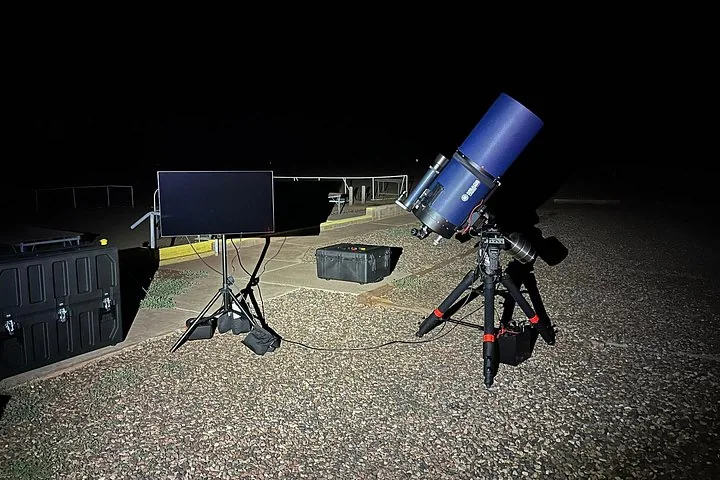
Small-Group Stargazing with Telescopes
- Large-aperture telescopes with premium eyepieces
- Live views of deep space on a 4k monitor
- Groups of up to twelve
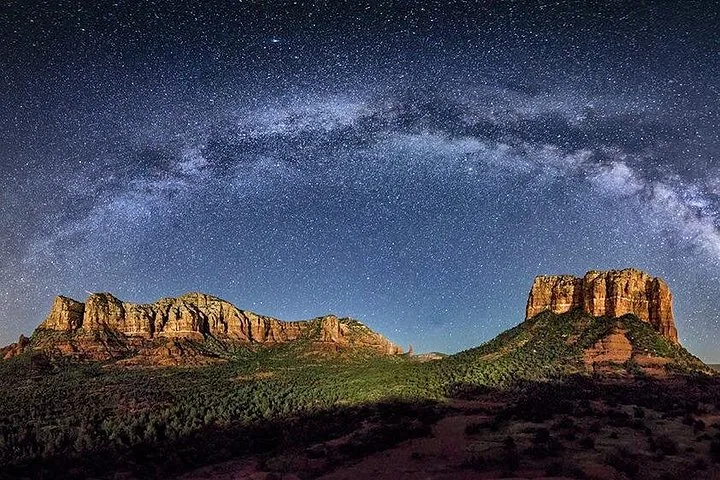
Night Sky Star Story & Galaxy Tour
- Constellation stories with a laser pointer and planisphere
- Big-screen constellation images and hands-on visuals
- Chairs and blankets