A red-rock town in Arizona that dims its lights on purpose, named an International Dark Sky
Community in 2014. Follow an astronomer's laser across the constellations, then find planets and star clusters in a big telescope.
Where it really meetsPickup or drive-yourself, spelled out
Real guest ratingsLive Viator & Tripadvisor figures
Free cancellationUp to 24 hours before, on every tour here
Clouded out?A new date or a full refund from Viator
Tours
Choose your Sedona stargazing tour
In the centre, the flagship telescope tour, the most reviewed night tour
here. Beside it, a small-group telescope tour capped at twelve and the lowest-priced option, a storytelling tour
of the constellations.
Professional astronomers, a laser-pointer sky tour and turns at large GPS telescopes, with chairs, blankets and parkas provided. You drive to the dark site yourself.
What's included
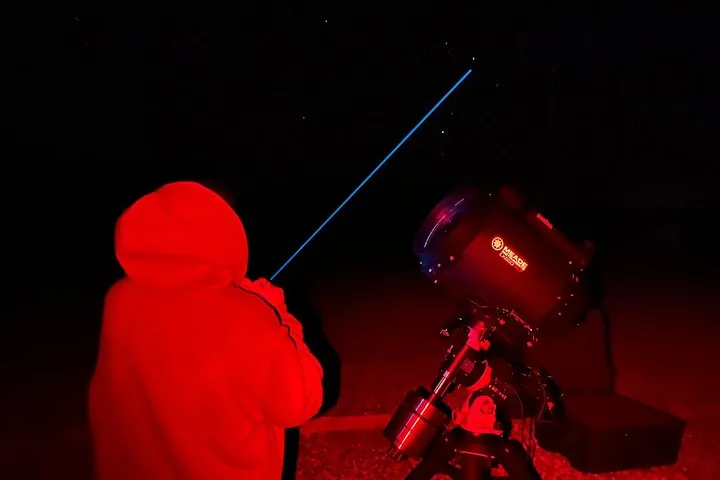
Constellation overview with a laser pointer
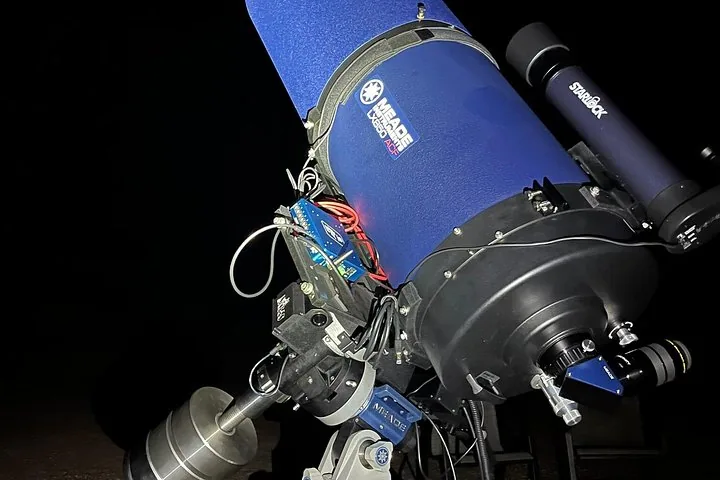
Turns at large GPS auto-positioning telescopes: planets, galaxies, nebulas, star clusters
Wide-view binoculars and a chair between turns
Blankets and parka jackets on loan
Not included: transport (directions are emailed after booking); up to 30 travelers
Two hours of Babylonian, Greek, Roman and local Indigenous star stories, told with a laser pointer and props while you sit wrapped in a blanket. No telescopes: just your eyes.
What's included
Constellation stories with a laser pointer and planisphere
Big-screen constellation images and hands-on visuals
Chairs and blankets
Wheelchair and stroller accessible site (listing)
No telescopes: naked-eye stargazing; up to 20 travelers
The prices sit close together. What separates these tours is whether you look through telescopes,
goggles or just your own eyes, how many people share the night with you, and whether anyone drives you there.
The flagship tour has a child rate for ages 1 to 11, the small-group tour for ages 7 to 16. The
night hike needs at least 3 travelers per booking and the private jeep at least 2. Every tour here cancels free up to
24 hours ahead, and a weather cancellation gets you a new date or a full refund.
Why Sedona
A town that turns its lights down: a sky that stays dark.
In 2014 the International Dark-Sky Association, now DarkSky International, named Sedona the world's eighth
International Dark Sky Community. Outdoor lights in town are shielded and aimed down, and warmer
light colours are preferred, so the sky above the red rocks stays darker than you might expect from a busy
tourist town at about 4,500 feet.
The telescope tours still drive out of the centre. The flagship tour sets up on a private dark-sky site off
Indian Cliffs Road, which its operator puts at about a 20-minute ride from where Highways 89A and 179 meet;
the small-group tour uses several sites within a half-hour drive. None of the telescope tours picks you up,
and none of them can control the weather: clouds cancel tours, and a bright moon washes out the faint galaxies
and nebulas the telescopes are there for.
2014
The year Sedona became the world's eighth International
Dark Sky Community.
Dark Sky CommunityTelescopesMilky WayRed rocks
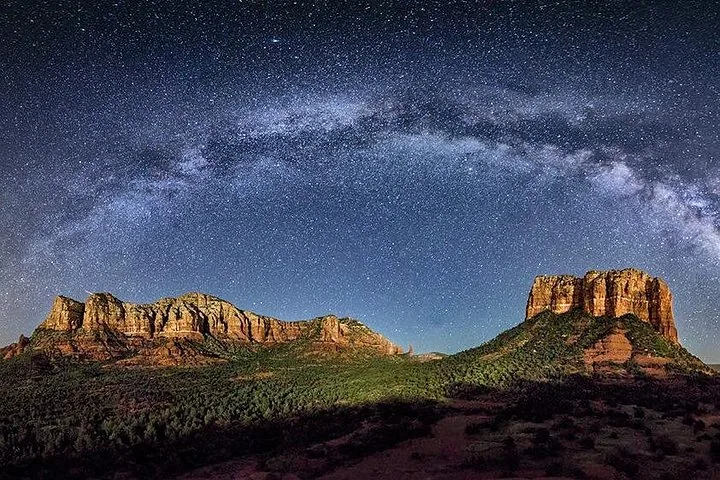
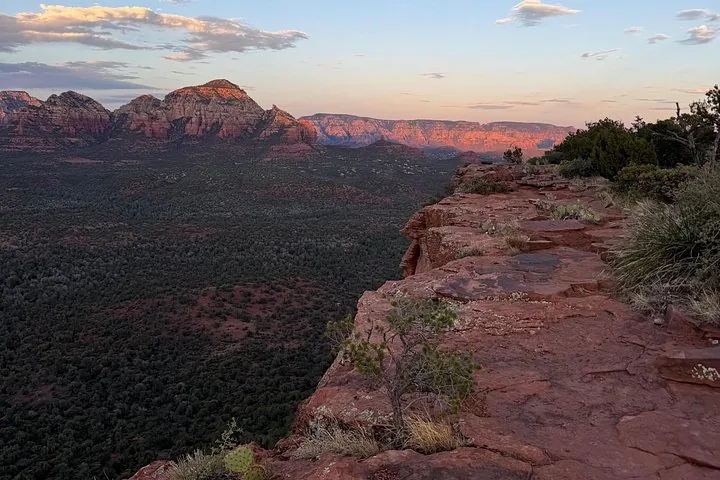
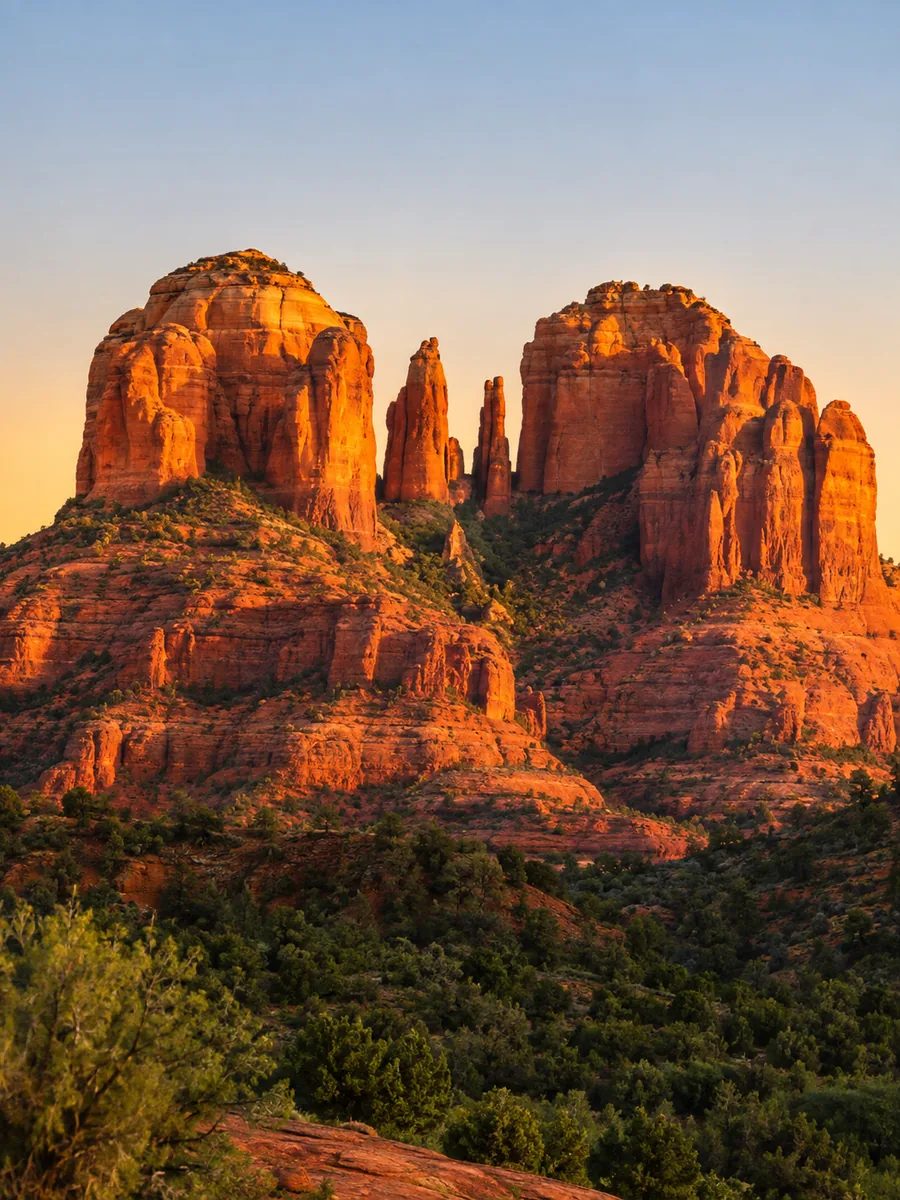
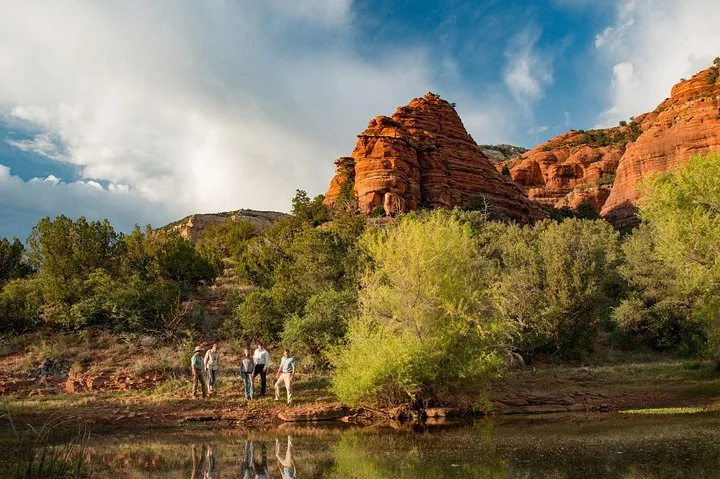
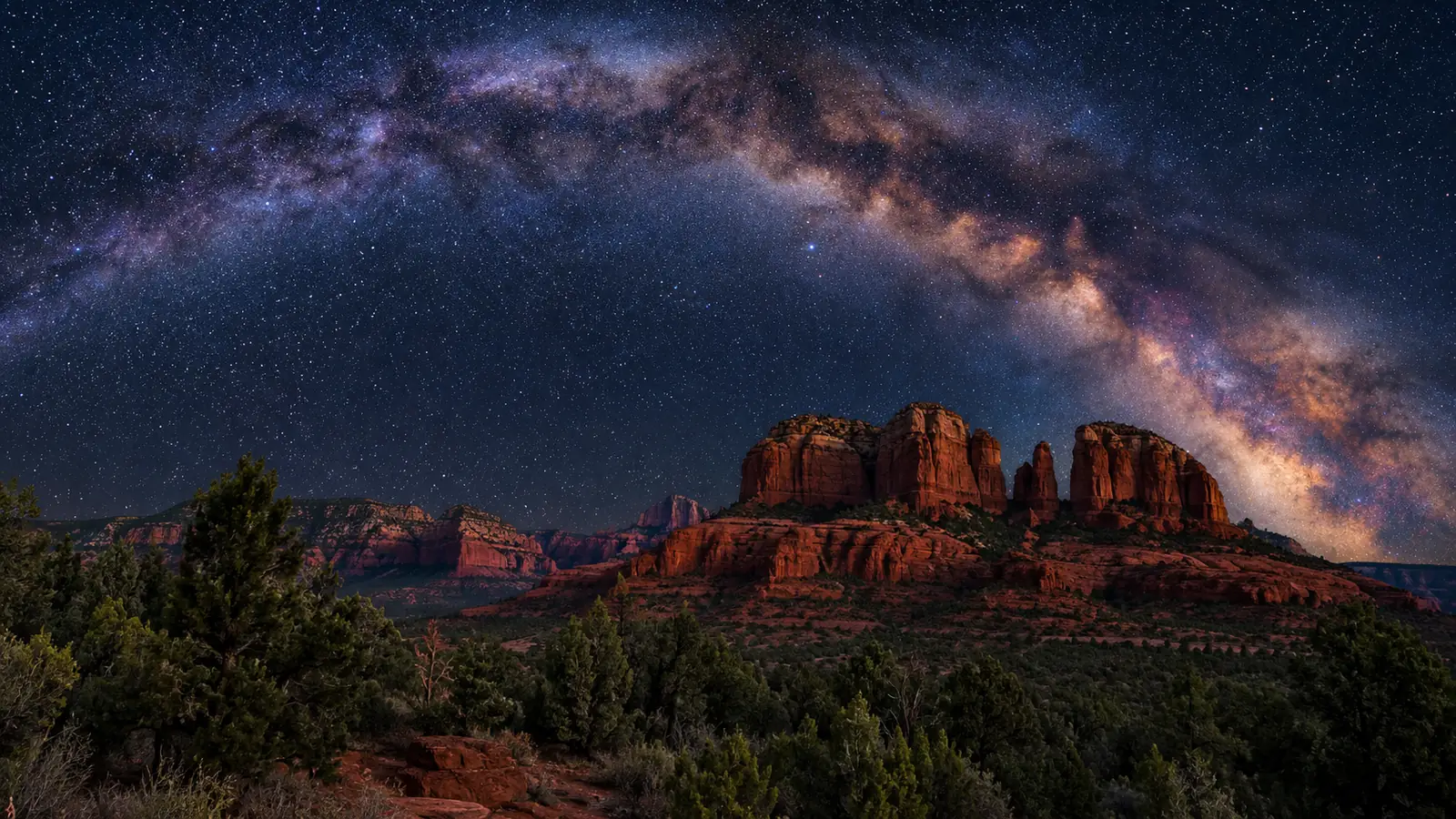
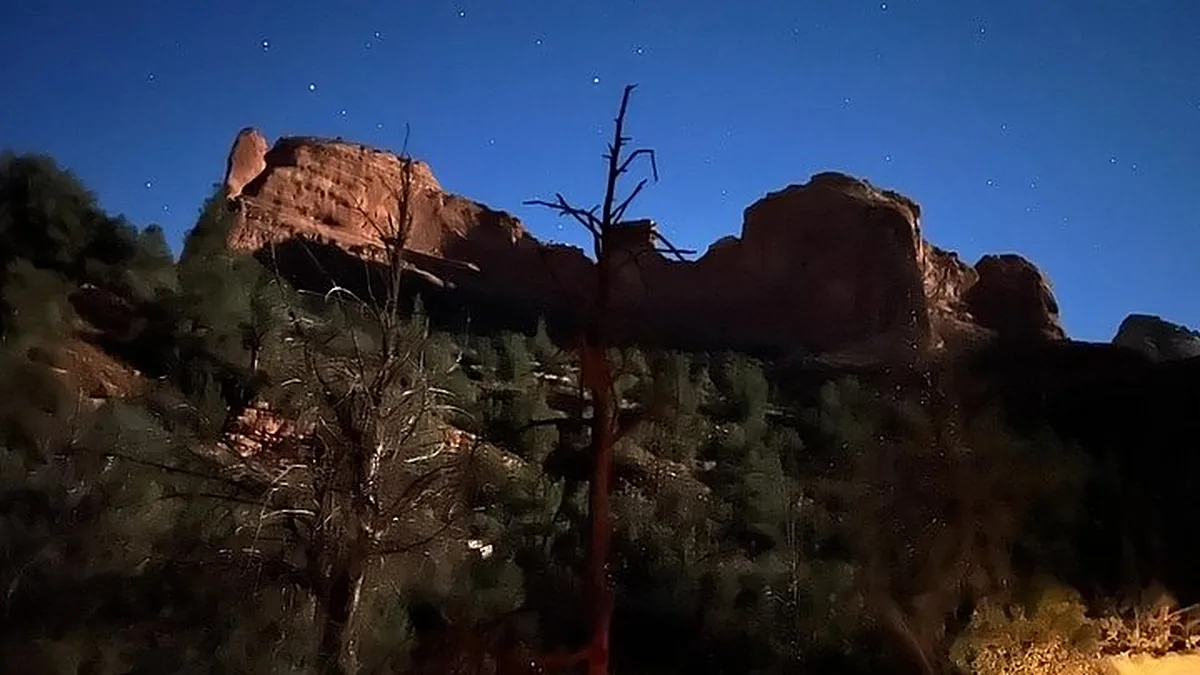
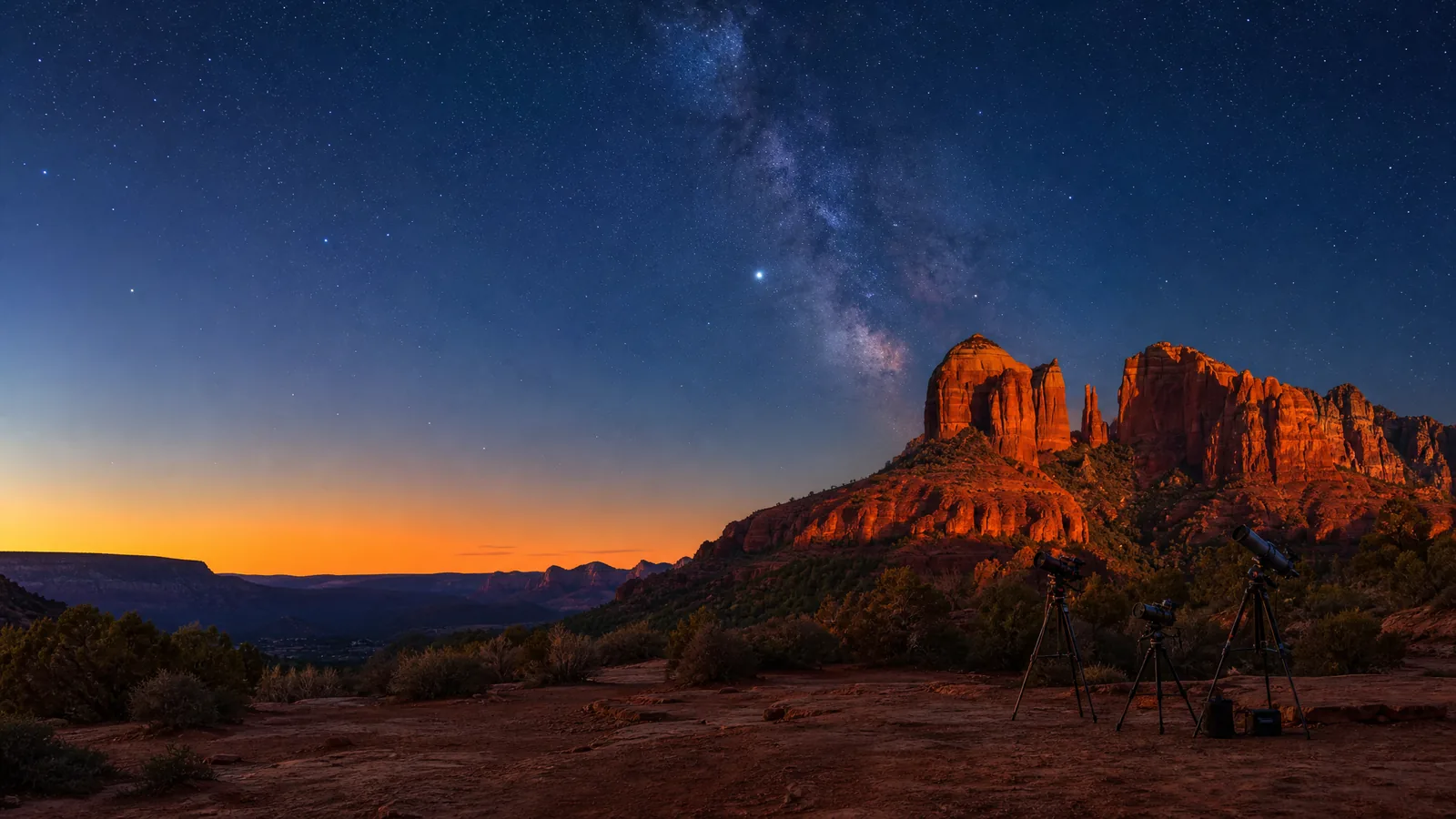
Cathedral Rock by day. The night tours meet at dark sites outside central Sedona.
01
Do they pick you up?
Not on the telescope tours: you drive yourself and get directions after booking. Only the private night hike includes pickup.
02
What if it is cloudy?
The tours need good weather. If one is cancelled for weather, Viator offers a new date or a full refund.
03
Does the moon matter?
Yes. The flagship operator advises avoiding the 4 nights before the full moon, and the full moon itself, for a star-filled sky.
04
Who might skip it?
Anyone expecting space-telescope colours. Guests note that eyepiece views are small and mostly grey; the wonder is seeing them live.
The night
How a stargazing night unfolds
The flagship tour, step by step: about 1 hour 15 minutes under the sky, plus the drive out.
01
Book and get directions
After booking, the operator emails the departure details and directions to the dark-sky site.
After booking
02
Drive out of town
Park, then walk about 200 yards on dirt and grass to the telescopes, according to the operator.
About 20 minutes' drive
03
A tour of the sky
A professional astronomer traces the constellations with a laser pointer.
Start of the tour
04
Telescopes and binoculars
Take turns at large GPS telescopes, at least six objects a night by the operator's count. Between turns, sweep the sky with binoculars from a chair.
Getting there, prices and ages, the house rules and what to bring: one tab each.
Drive yourself: the flagship, small-group and storytelling tours do not include transport.
The flagship's Viator meeting point is Indian Cliffs Road, Sedona; the operator emails directions after booking.
The small-group tour picks one of several dark sites within a half-hour drive of downtown and sends directions on confirmation.
The storytelling tour meets at the end of Cultural Park Place in West Sedona; the listing shows a 7:30 pm start.
Want to be driven? The private night hike picks you up from Sedona-area lodging.
Flagship tour on Viator: from $127 per person, with a child rate for ages 1 to 11.
The same operator lists $117 per adult, $76 per child (12 and under) and $1,200 for a private tour of up to 6 on its own website.
Small-group telescopes: from $125 per person; child rate for ages 7 to 16, and it may not suit children under seven.
Storytelling tour: from $100 per person, with child (5 to 10), youth and senior rates.
The goggle-only UFO tour is for ages 14 and up; the private jeep tour takes children from age 3.
The flagship site is private property: no alcohol, no smoking and no pets. Restrooms are available.
It is not wheelchair accessible: about 200 yards on dirt and grass, and some objects need a short step ladder.
The storytelling tour's site is listed as wheelchair and stroller accessible.
The Sedona UFO Tours night tour asks you to check in 30 minutes early; late arrivals count as no-shows. There are no restrooms at its viewing spots.
That tour also bans flash photography and all audio and video recording, and asks you to come in your own car, not a taxi or rideshare.
Warm layers: guests say it gets cold after dark, even when the flagship lends blankets and parkas.
Closed shoes for dirt paths and uneven ground.
Your own non-alcoholic drink: the flagship tour does not serve drinks, and the small-group tour excludes coffee, tea and snacks. The storytelling tour invites you to bring your favourite food and drinks.
The directions email, saved before you set off.
IncludedLaser-pointer sky tourThe constellations traced across the sky by a professional astronomer.
IncludedGPS telescopesLarge telescopes that find planets, galaxies, nebulas and star clusters for you.
IncludedWide-view binocularsYour own pair to sweep the Milky Way between telescope turns.
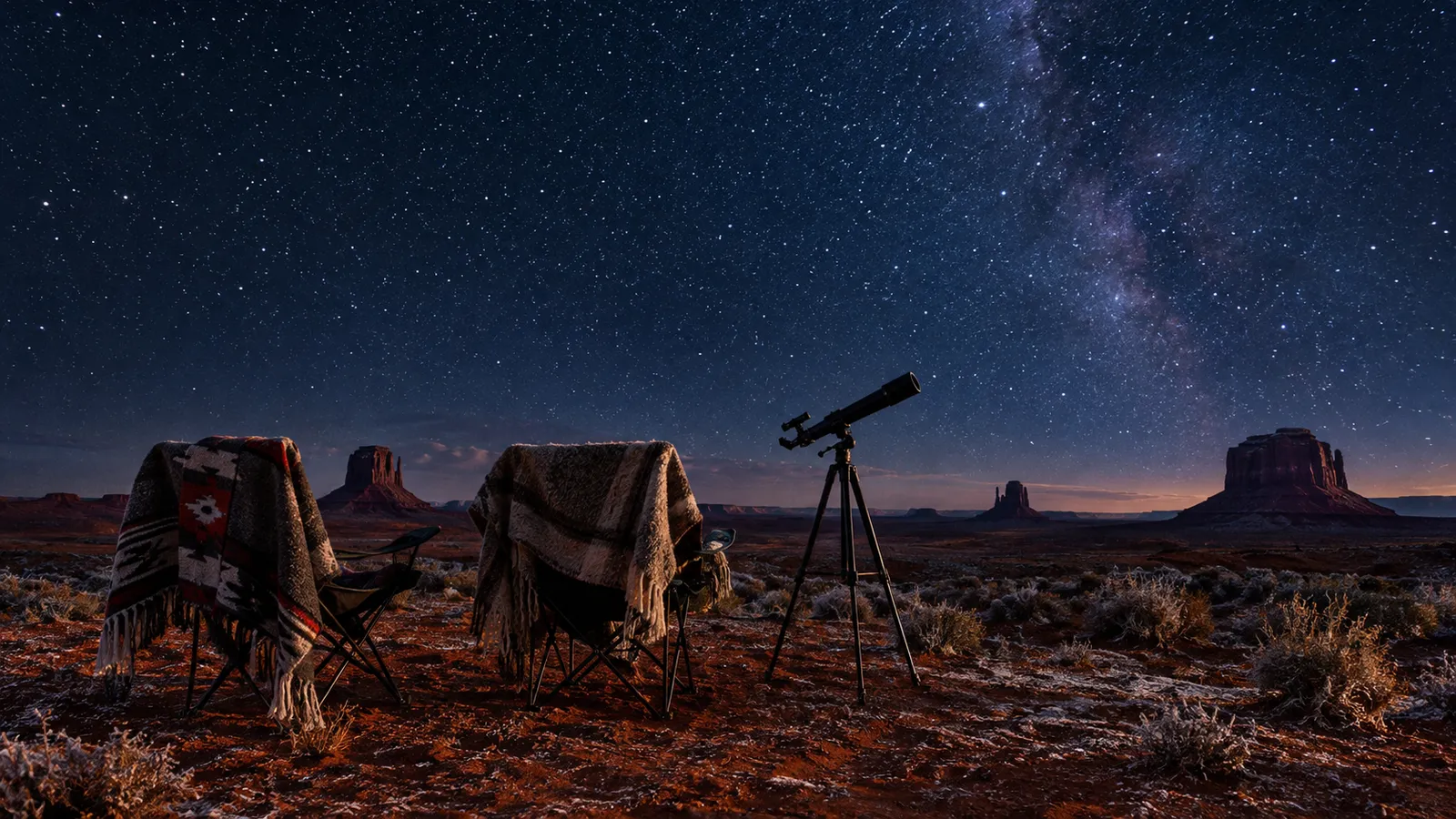
IncludedChairs, blankets, parkasOn loan for the session, because desert nights get cold.
Not includedTransportYou drive to the site; directions arrive by email after booking.
Bring your ownDrinksNone are served; non-alcoholic drinks of your own are welcome.
Where the night happens
The flagship meeting point
Indian Cliffs Road, Sedona
Indian Cliffs Rd, Sedona, AZ 86336, USA
This is the meeting point on the Viator listing for the flagship tour (listed there as "Award Winning Sedona Stargazing"), described as an
observing location near Oak Creek; the tour ends back here. The operator places its site in the Big Park and
Village of Oak Creek area, about a 20-minute ride from central Sedona, and emails exact directions once your
booking is confirmed. One guest found the meeting point a little confusing, so read the email before dark.
Timing, the small things guests wish they had known, what is nearby and the weather fine print.
Away from the full moon: the flagship operator advises avoiding the 4 nights before the full moon and the full moon night itself.
Start times: November to April at 7:30 and 9 pm, May to August at 9 and 10:30 pm, September at 8:30 and 10 pm, October at 8 and 9:30 pm (flagship operator).
Next full moons: October 25, November 24 and December 23, 2026, Arizona time (Old Farmer's Almanac).
All year: the flagship operator runs tours in every season.
Early in your trip: if clouds cancel your night, there is still time for a new date.
Check the moon phase before you book; several guests wish they had.
Read the directions in daylight: one guest found the meeting point confusing, another found the directions spot on.
Expect live views, not photos: galaxies and nebulas look faint and grey at the eyepiece.
Ask questions at the telescope: one guest found the group too big to hear the guide's overview.
Use a restroom before the storytelling tour: one guest noted there are none at the site.
Village of Oak Creek: the flagship operator's observing site is in this area south of central Sedona.
Cathedral Rock: the famous red-rock spires, on the Oak Creek side of town.
Cultural Park Place: West Sedona, where the storytelling tour meets.
Pink Jeep office: 204 N State Route 89A, start of the daytime red-rock jeep tour.
Every tour here requires good weather: a weather cancellation means a new date or a full refund on Viator.
You can cancel any tour here for a full refund up to 24 hours before it starts.
The National Weather Service defines Arizona's monsoon season as June 15 to September 30, so keep summer plans flexible.
The Sedona UFO Tours night tour does not operate during or around the full moon, and its start time can move with sunset.
Sedona after dark
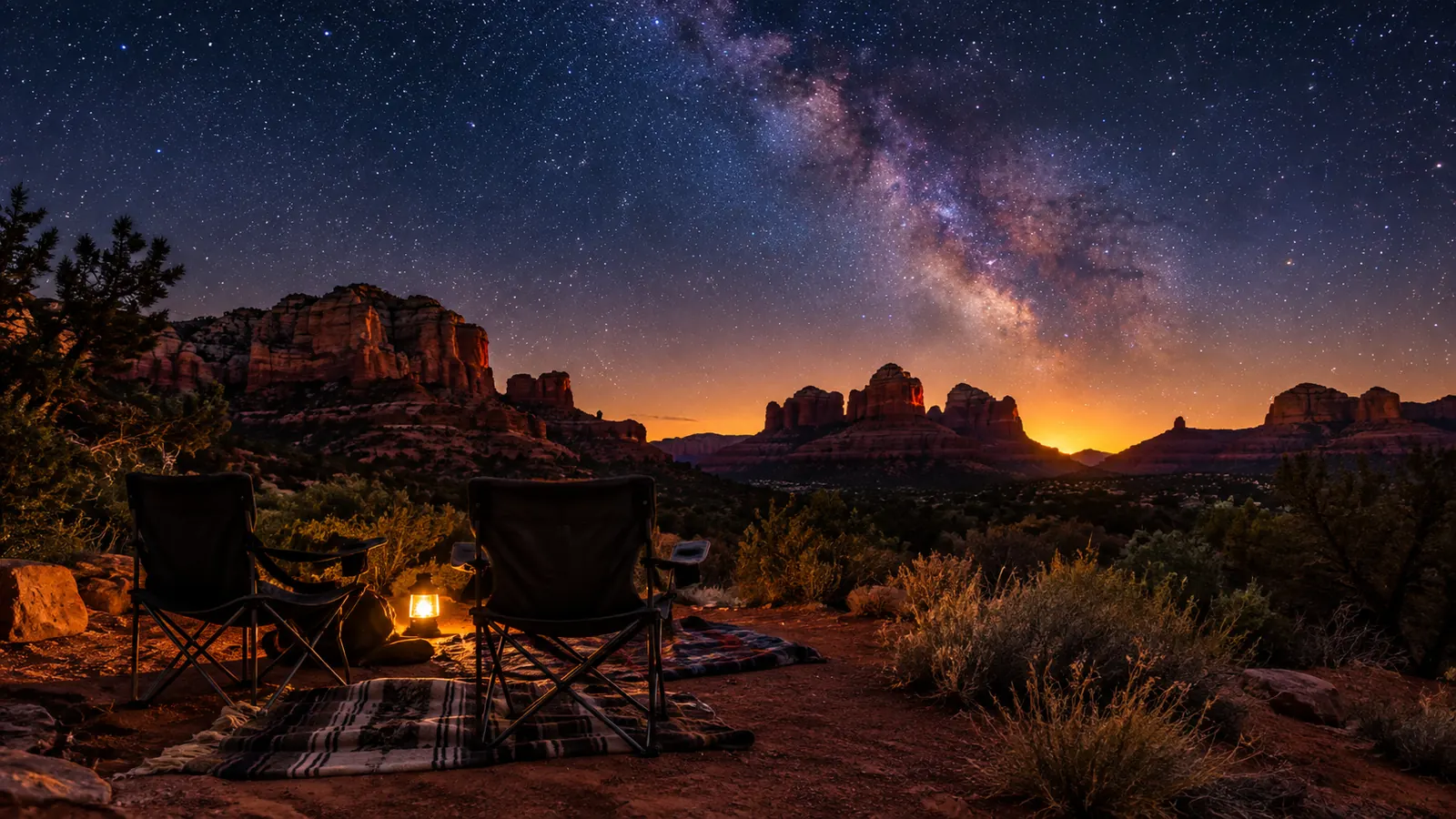
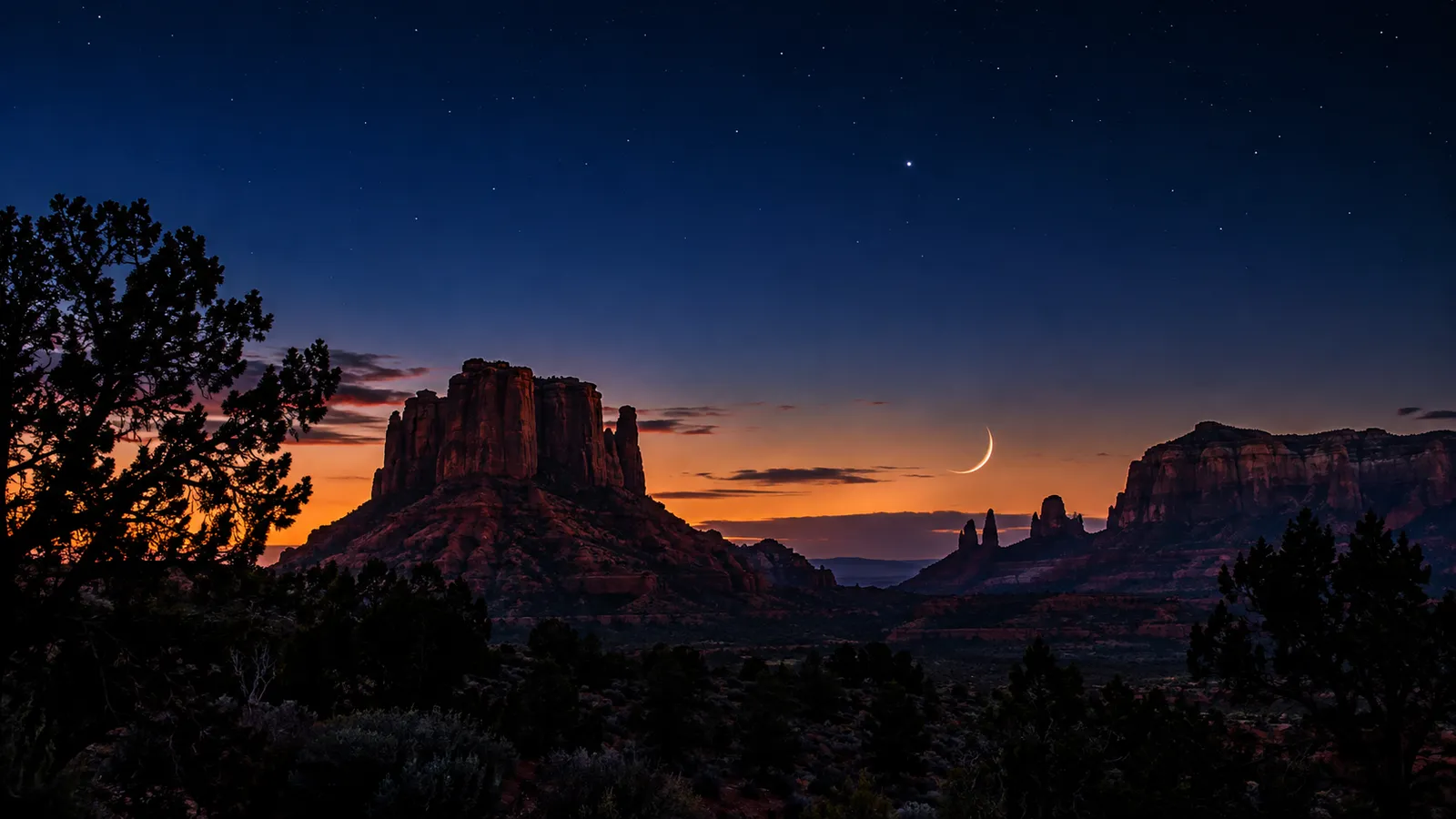
Red rocks below, a dark sky above, a telescope in front of you.
Pick a night early in your trip and keep the free-cancellation window in reserve.
4.3★★★★★ 977 reviews · Sedona Stargazing Tour live Viator & Tripadvisor figure
★★★★★
Our guide was extremely well versed in astronomy and kept the evening interesting as we viewed many celestial objects. This was a wonderful way to spend an evening taking advantage of Sedona's dark skies. [...]
★★★★★
Our astronomer was personable, knowledgeable, and friendly. The drive to the spot was easy, the dirt road was clearly marked, and we appreciated the warm blankets waiting in the chairs for us.
★★★★★
Very knowledgeable guide and assistant. [...] They have great telescopes and there were enough for the group that you didn't have to wait. They had comfortable chairs, blankets, and binoculars as well.
★★★★★
[...] Chad's knowledge of the history and stories behind the constellations actually made them easier to spot. He was also very friendly and entertaining. [...] Seeing the Milky Way was so special.
★★★★★
This was a very cool experience that was well organized to view stars and planets in Dark Sky Sedona. The directions to get to the viewing area were accurate, the guides were very knowledgeable and accommodating.
★★★★★
Our guide Ty was super knowledgeable about the plants, animals and stars on the hike as well as very engaging. The trail was a mix of level terrain and brief climbs.
★★★★★
Very knowledgeable guides who can answer just about any questions you have. Plenty of great telescopes, so there is very little waiting. Overall a fun and educational experience. [...]
★★★★★
Great trip to the stars with a knowledgeable astronomer! The experience managed to be both informative and entertaining. A small group meant there was time for everyone to take their time viewing the objects [...]
★★★★★
This was really good. [...] I learned so much and now I want to learn more. Don't miss this one.
Before dark
See the red rocks by day
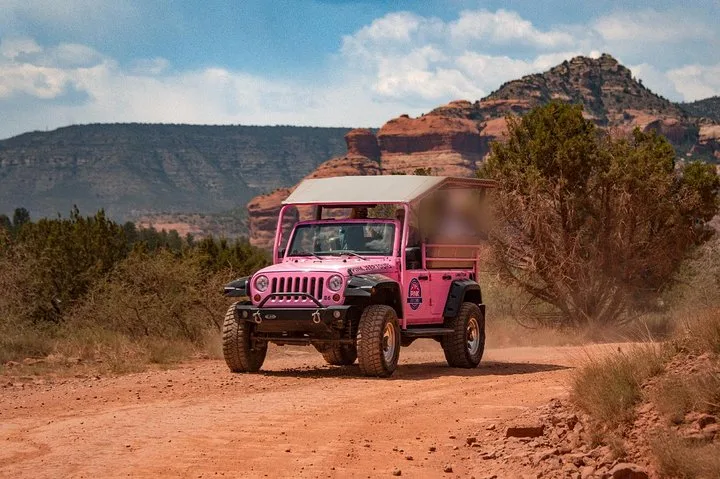
The night tours show you the sky; this one shows you the landscape under it, on a gentle two-hour ride in one of Sedona's pink jeeps.
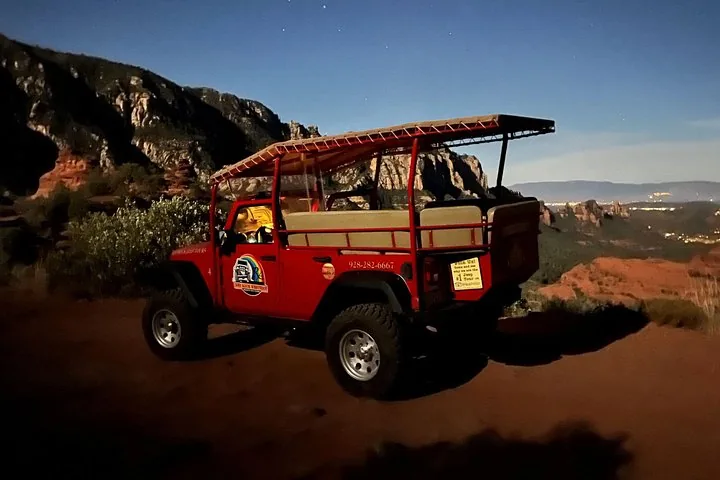
See the red rocks you will be stargazing above in daylight first: a fully guided, two-hour Pink Jeep ride out along Dry Creek Road, with round-trip transport from the Pink Jeep office in town. Food, drinks and gratuities are extra, and it is not recommended for travelers with back problems.
Sedona sells a lot of night tours, and they are not the same thing. Some put you behind big
telescopes with an astronomer. Others hand you night vision goggles and UFO stories, or walk you up a trail
under the stars. Here is how to choose, and what the sky can and cannot promise.
Telescope tour, goggles or naked eye?
The flagship tour and the Night Owl small-group tour are telescope tours. An astronomer traces the
constellations with a laser pointer, then you take turns at large telescopes aimed at planets, star clusters,
galaxies and nebulas. The storytelling tour works differently: chairs, blankets, a laser pointer and a pile of
props, but no telescopes, and the evening is about the myths behind the constellations. The UFO tours swap
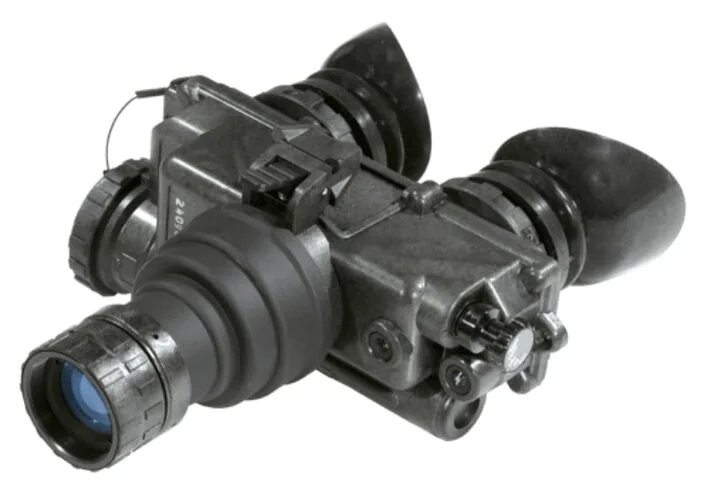
telescopes for night vision goggles, which brighten the whole sky instead of magnifying one object.
The goggle tours differ too. The Sedona UFO Tours night tour gives one pair to every two adults and lasts about
1 hour 45 minutes. The smaller goggle tour hands every guest their own pair for an hour, in groups of up to four,
and takes nobody under 14.
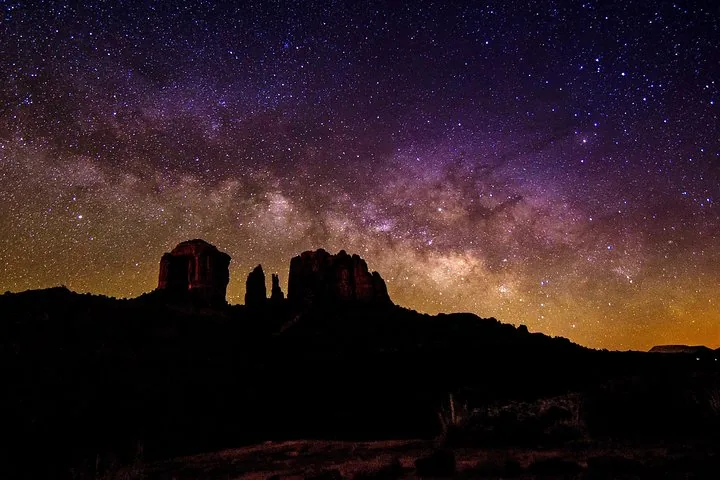
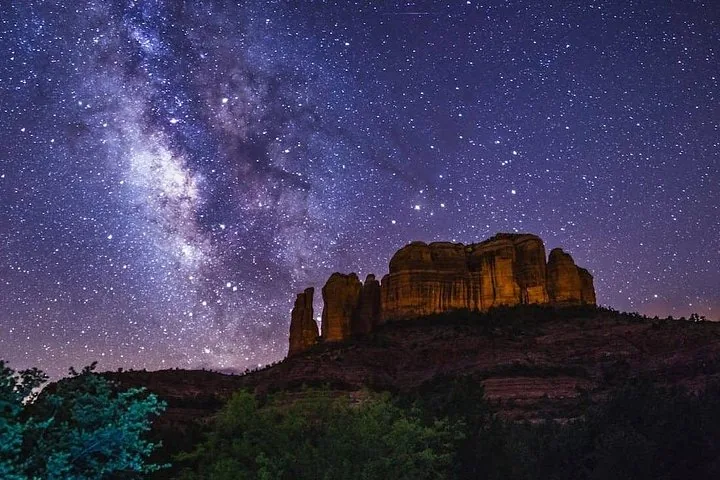
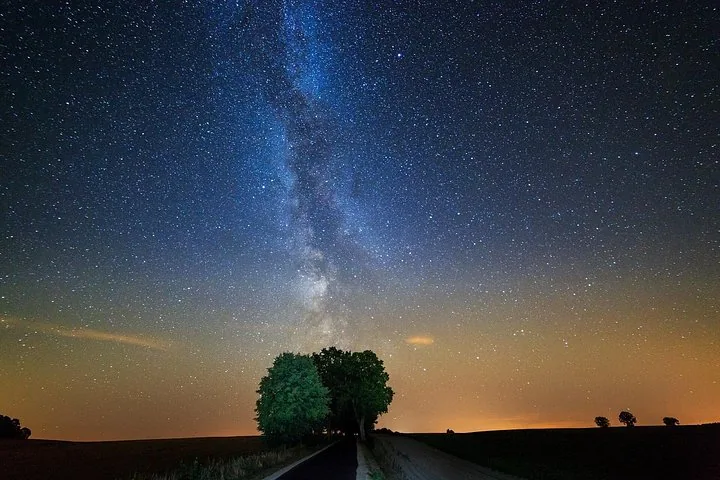
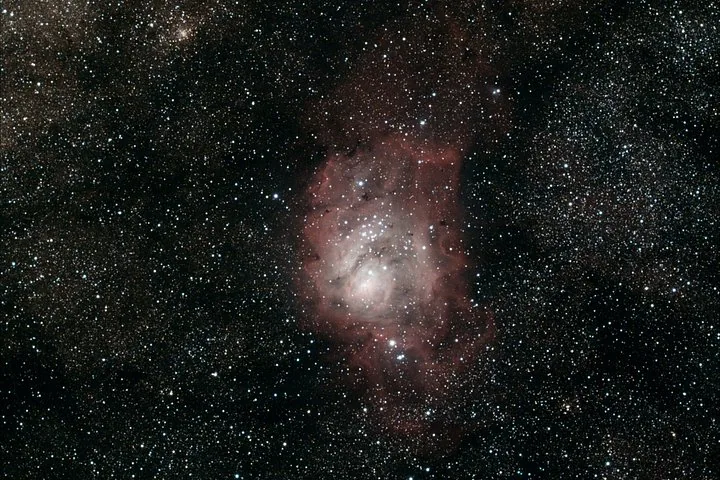
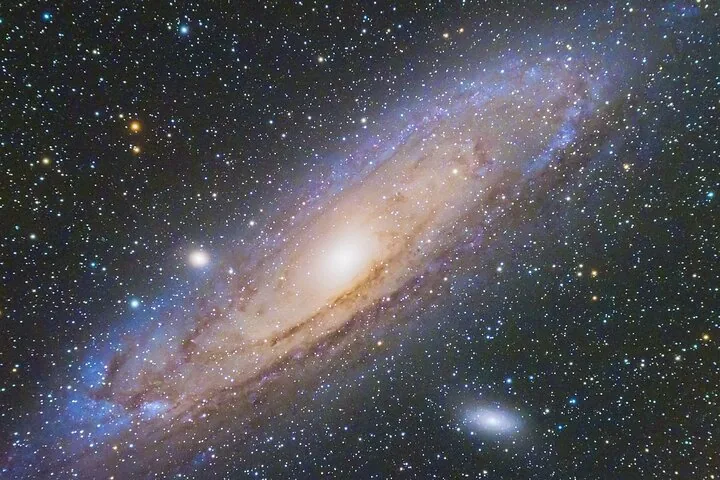
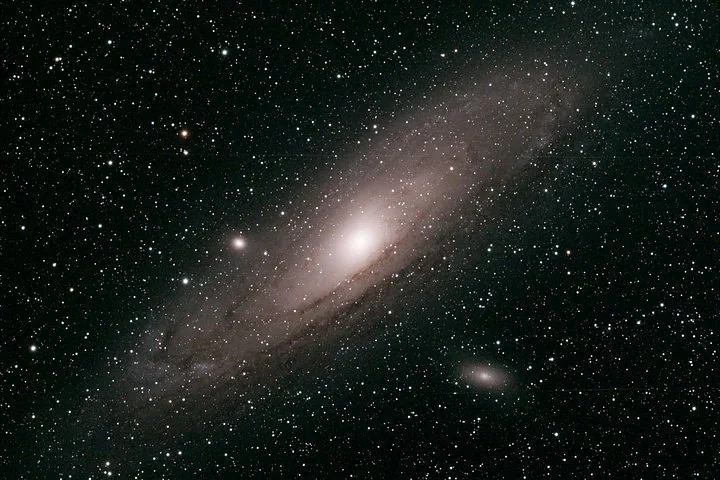
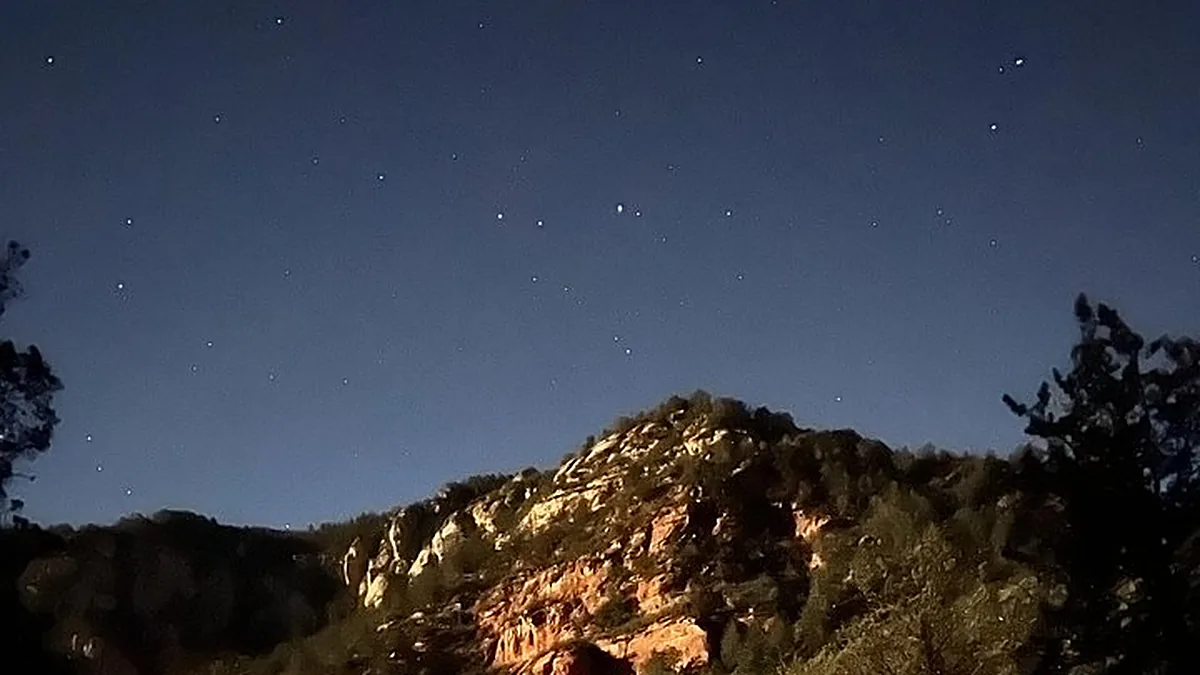
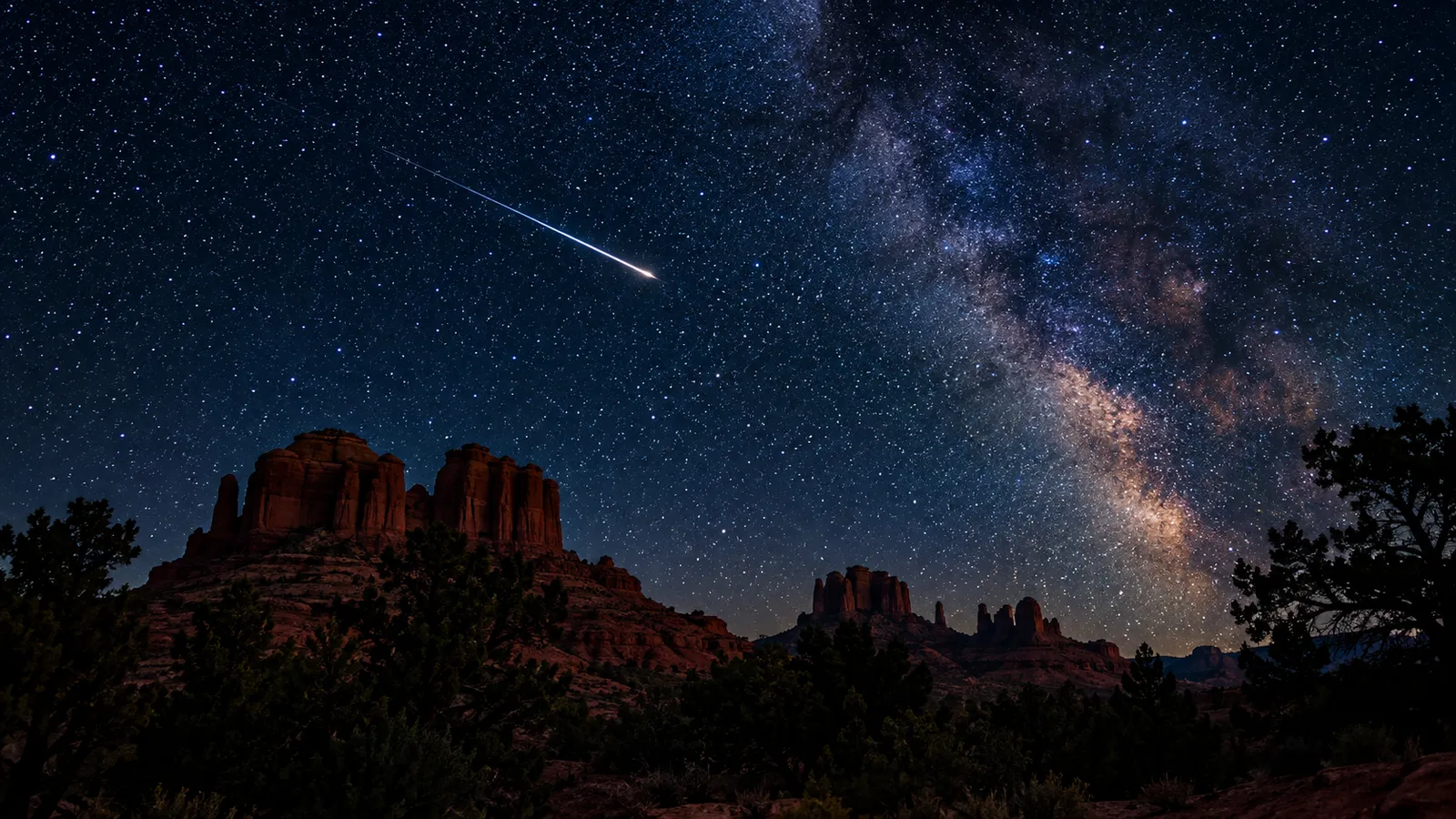
A long-exposure photo. At the eyepiece, a galaxy is a soft grey glow, and seeing it live is the point.
What you will see at the eyepiece
The flagship operator promises
at least six celestial objects
through its telescopes, picked from galaxies, star clusters, nebulas, planets and the Milky Way when it is up.
It adds that satellites, shooting stars and the International Space Station regularly cross the sky during a
session. The Viator listing invites you to ask the astronomers for something specific.
Judge it by your eye, not by a camera. Guests who expected magazine colours say so in their reviews.
The honest small print: the sky decides. Clouds cancel tours. You get a new date or a
full refund, but a short trip can run out of nights. Guests who went near the full moon say it washed out the
faint objects. Book early in your stay and check the moon first.
Picking your night
The moon matters more than the month. The flagship operator advises skipping the 4 nights before the full
moon and the full moon night itself. For the rest of 2026, the full moons fall on October 25, November 24 and
December 23, Arizona time (dates from the
Old Farmer's Almanac,
converted from Eastern time). Plan around them.
The season changes the clock. Winter tours start at 7:30 pm, summer tours at 9 pm or later, and the National
Weather Service marks June 15 to September 30 as Arizona's monsoon season. In summer, keep a spare night.
Getting there after dark
The telescope tours meet at dark sites outside the town centre, and none of them includes transport. The
flagship operator puts its site about a 20-minute ride from the junction of Highways 89A and 179, then you walk
about 200 yards on dirt and grass from the car. It says nobody has ever got lost on the way. One guest still
found the meeting point confusing, so read the email in daylight. The Sedona UFO Tours night tour has you follow
the guide in your own vehicle, and it asks guests not to arrive by taxi or rideshare. Rather not drive at night?
The private night hike is the one tour here with lodging pickup.
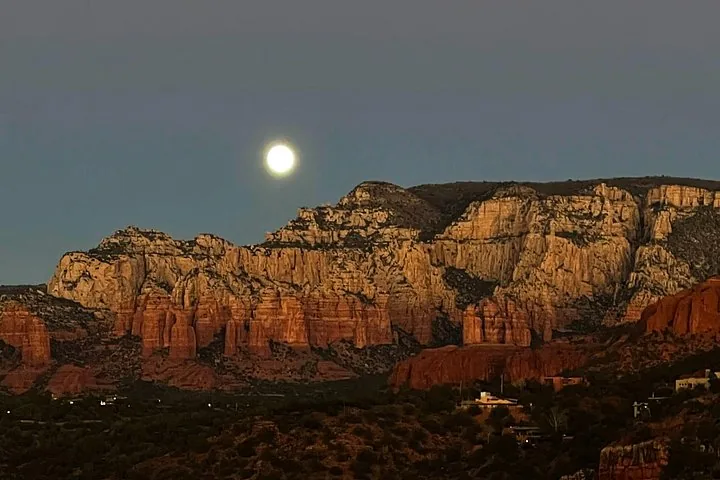
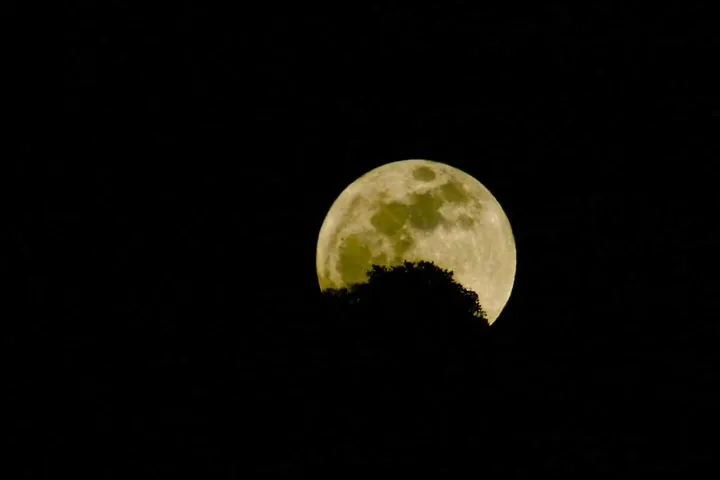
A full moon lights up the whole sky, which hides the faintest stars and galaxies.
Which tour for which traveler
A first telescope night: the flagship tour, the most reviewed here, with binoculars and parkas included.
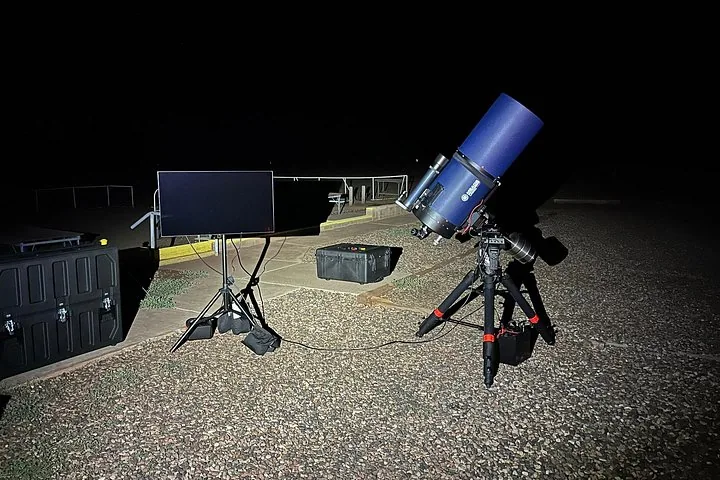
Less waiting at the eyepiece: the Night Owl tour, capped at twelve, with a live 4k screen.
Myths and naked-eye stars: the storytelling tour, also the pick for a wheelchair user.
No night driving: the private night hike, with pickup and headlamps.
The UFO legend: a goggle tour, with no promise of a sighting.
Making the most of the night
Book an early night in your trip so a cloud-out leaves room for a new date. Dress for cold, even after a hot
day. Arrive on time: the UFO night tour treats a late check-in as a no-show. Leave the wine in the hotel, because
the flagship site is private property with a ban on alcohol and smoking. At the telescope, take your time and ask
what you are looking at.
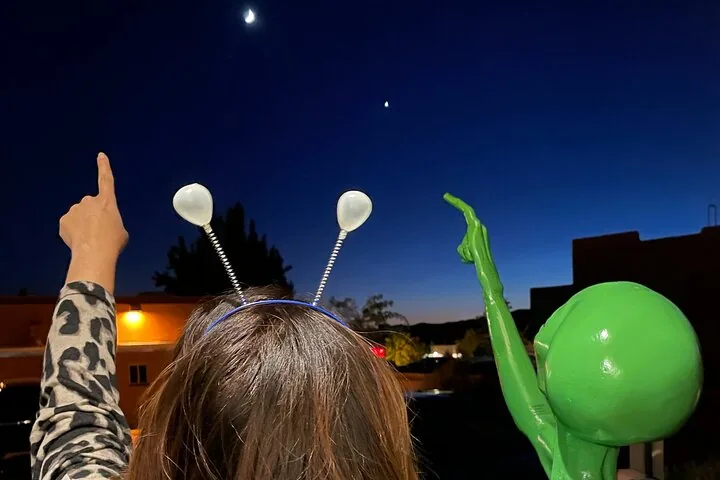
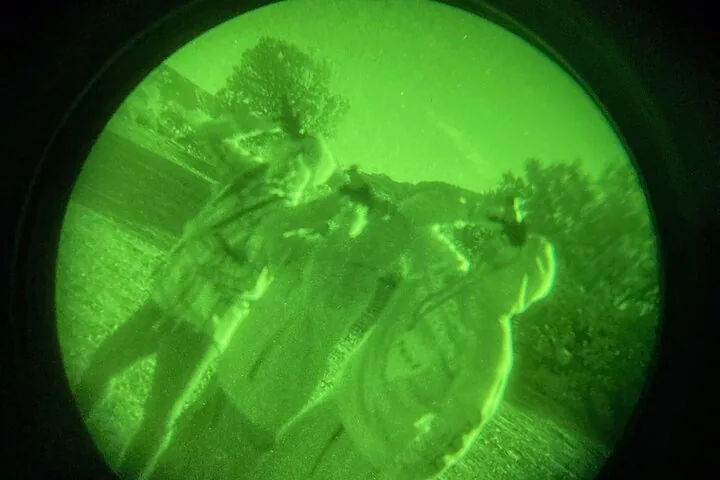
Through night vision goggles, used on the UFO tours, the dark turns into a bright green scene.
Straight answers to what visitors ask most about stargazing in Sedona.
How much is a stargazing tour in Sedona?
On Viator the tours listed here run from $100 per person (a storytelling tour without telescopes) to $225 per person for a private night hike. The flagship telescope tour is from $127 per person, and the small-group telescope tour from $125. The flagship operator's own website lists $117 per adult and $76 per child. See the price guide.
Do Sedona stargazing tours pick you up from your hotel?
The telescope tours do not: you drive to a dark site and get directions after booking. The flagship tour meets off Indian Cliffs Road, which its operator describes as about a 20-minute ride from central Sedona. Of the tours here, only the private night hike includes pickup from your lodging.
What happens if it is cloudy?
Every tour listed here needs good weather. If the operator cancels for weather, Viator offers a different date or a full refund. You can also cancel yourself for a full refund up to 24 hours before. One flagship guest was rescheduled to the following night after a weather cancellation.
Does the full moon ruin stargazing?
It washes out faint objects. The flagship operator recommends avoiding the 4 nights leading up to the full moon, and the full moon night itself, if you want a star-filled sky; they still show the same telescope targets every night. The next full moons fall on October 25, November 24 and December 23, 2026 (Arizona time). The Sedona UFO Tours night tour does not run around the full moon at all. See the best time to go.
Is Sedona a dark sky city?
Yes. The International Dark-Sky Association (now DarkSky International) named Sedona the world's eighth International Dark Sky Community in 2014. Outdoor lights are shielded and pointed down. Read Sedona's dark sky explained.
What will I actually see through the telescope?
The flagship listing promises planets, stars, galaxies, nebulas and star clusters, depending on the night. Guests point out that eyepiece views are smaller and less colourful than long-exposure photos: galaxies look like soft, grey smudges. The operator adds that satellites, shooting stars and the International Space Station often pass overhead. The small-group tour also streams live images to a 4k screen.
How long does the tour last, and when does it start?
The flagship tour lasts about 1 hour 15 minutes. Its operator runs two start times a night that change with the season, for example 7:30 and 9 pm from November to April and 9 and 10:30 pm from May to August, and times can move on the day for weather.
Are stargazing tours in Sedona good for kids?
Several are. The flagship tour has a child rate for ages 1 to 11 on Viator, and the storytelling tour has child and youth rates. The small-group telescope tour may not suit children under seven, and the goggle-only UFO tour is for ages 14 and up. See stargazing with kids.
What should I wear?
Warm layers, even in summer: guests say it gets cold once the sun is down. The flagship tour lends blankets and parka jackets, and you will walk a short way on dirt and grass, so wear closed shoes. See what to wear.
Is a Sedona UFO tour worth it?
If you want night vision goggles and stories, yes; if you want telescopes, no. The UFO tours use goggles rather than telescopes, and nobody can promise a sighting. Compare them in UFO tour vs telescope tour.
Is it cheaper to book the stargazing tour direct?
For the flagship tour, yes: the operator lists $117 per adult on its own site, against $127 per person on Viator. Viator lets you cancel free up to 24 hours ahead; the operator refunds direct bookings cancelled more than 12 hours ahead and itself recommends booking direct. For this tour, direct wins on both counts.
Ready to book
Find the night that fits your sky.
Free cancellation up to 24 hours before on every tour below, and a new date or a refund if clouds cancel it.

 Up to 12 guests
★ 4.71 h 15 minFree cancellation 24 h