Booking choice: The flagship telescope tour, from $127 per person. Check dates Tour details
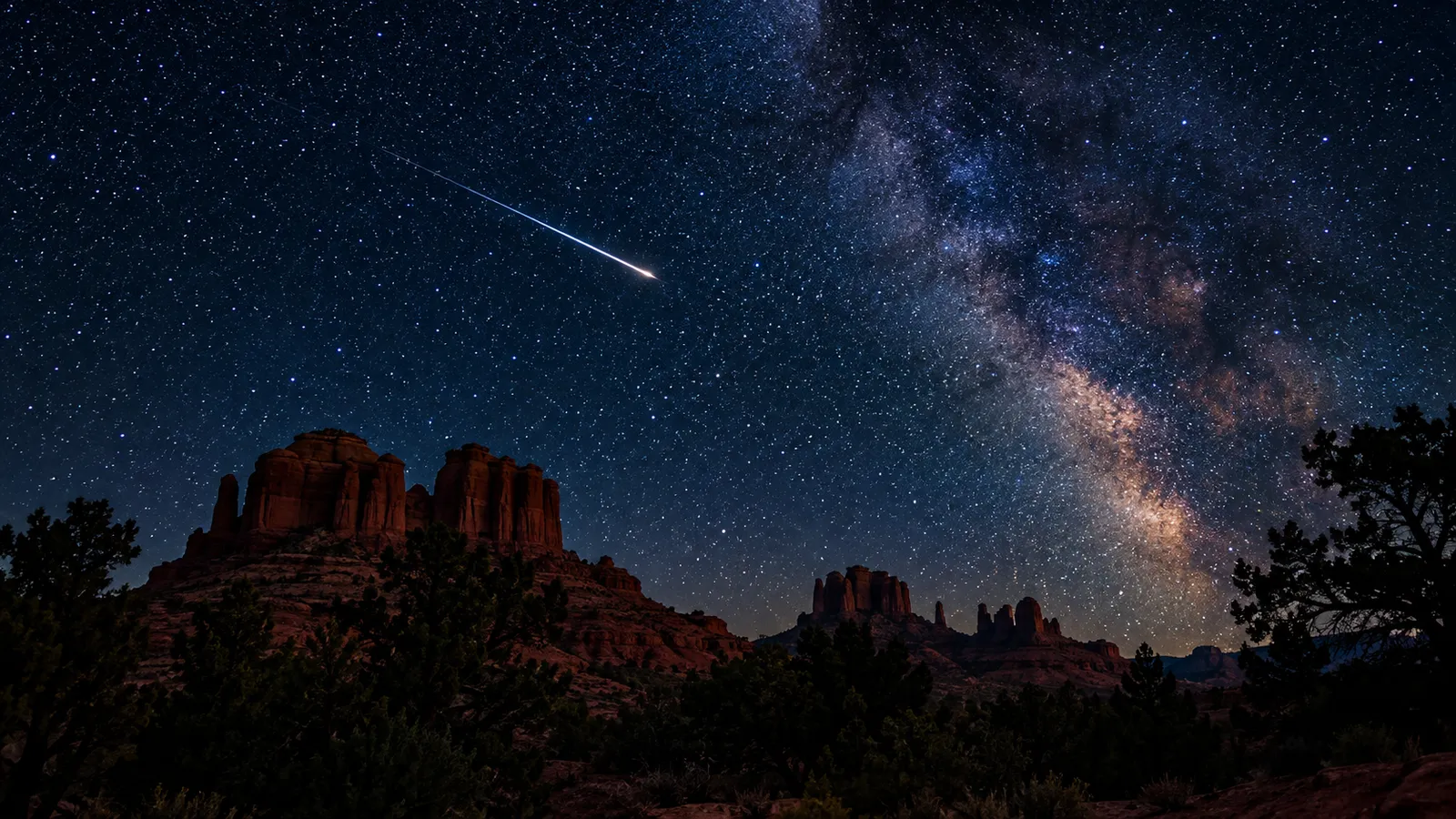
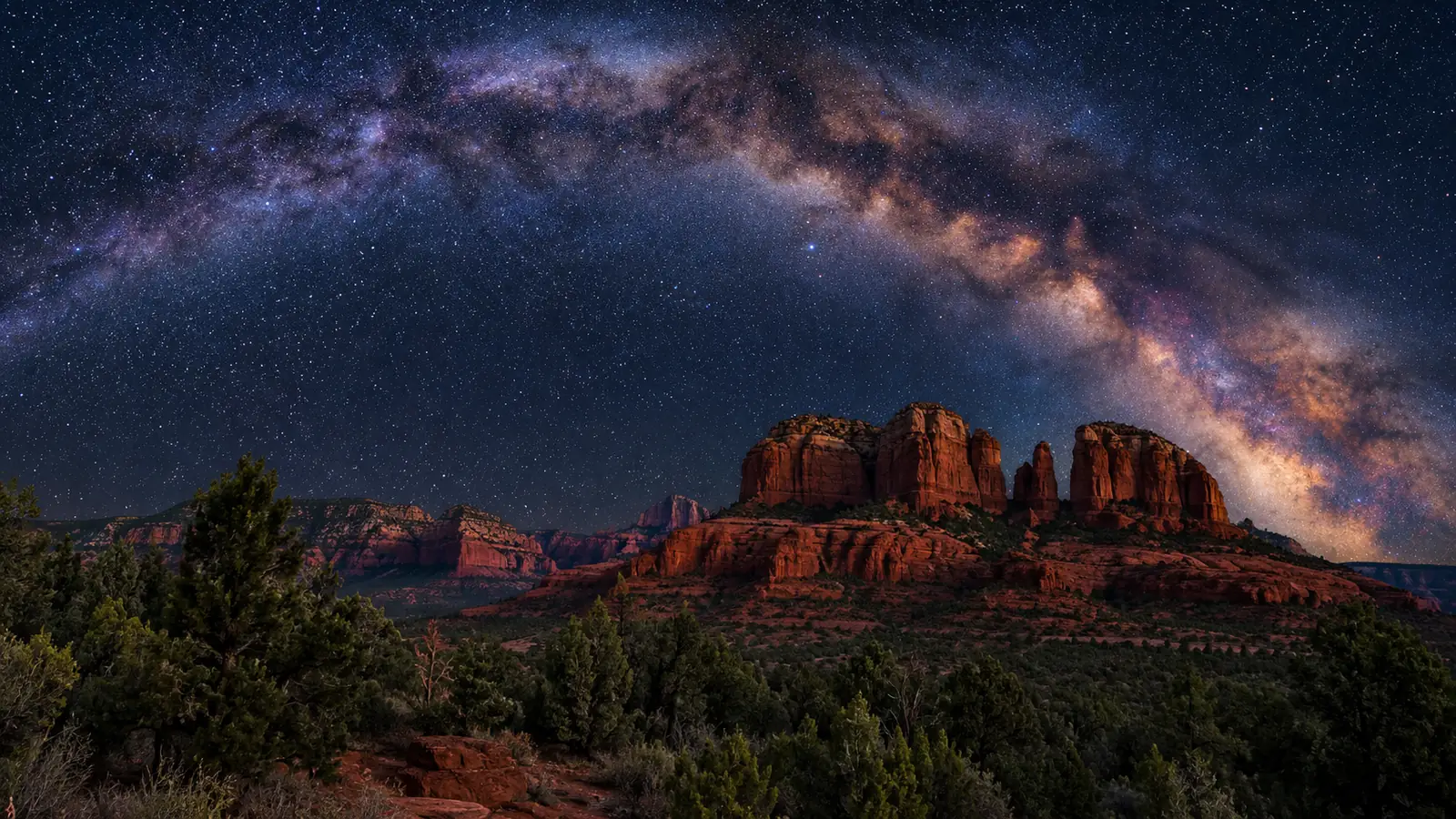
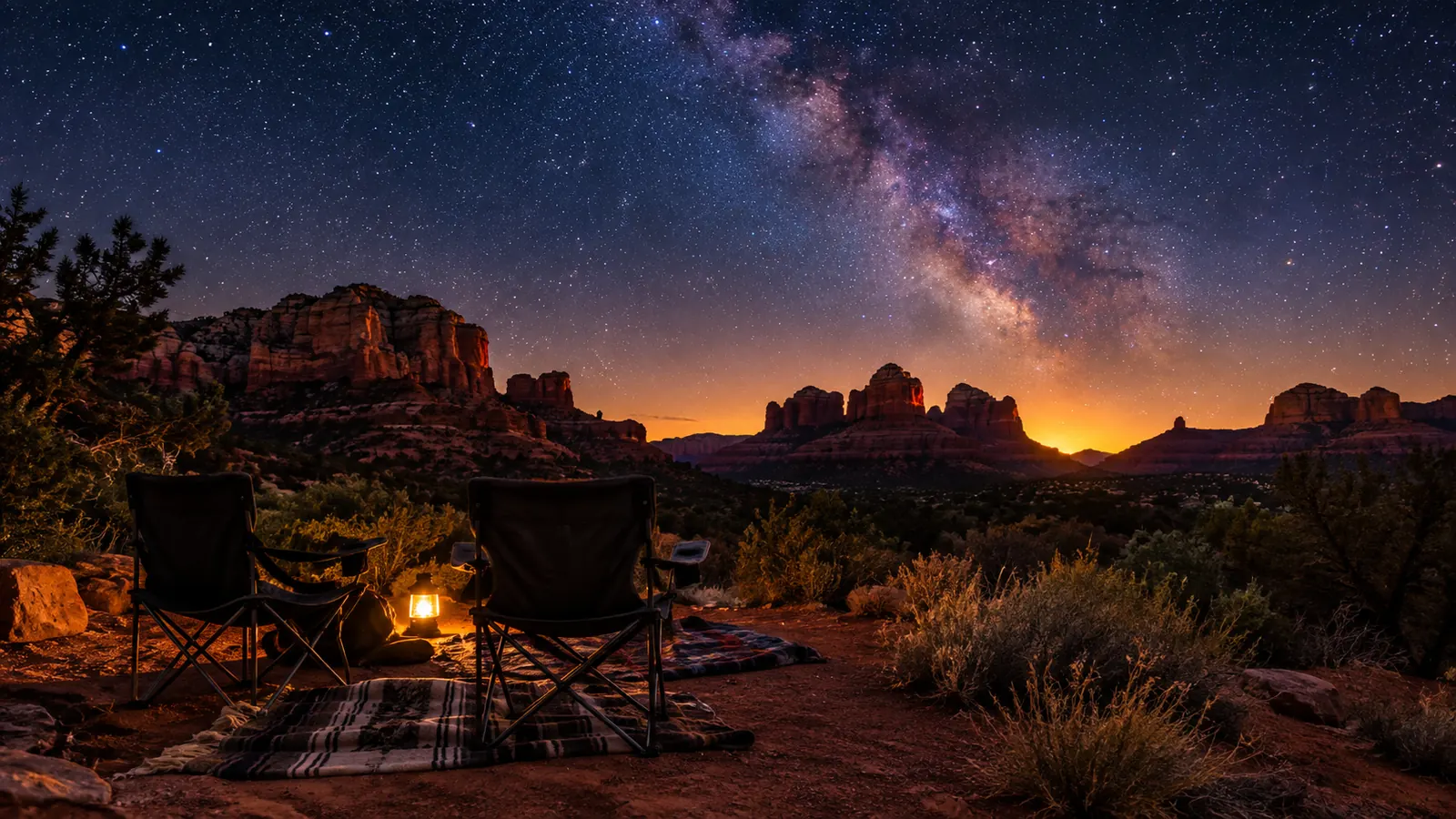
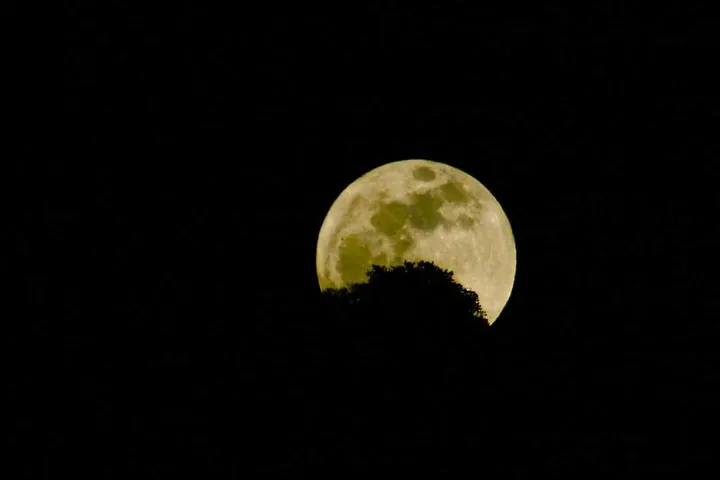
A full moon is the brightest light in the Sedona sky. It doesn't cancel a tour, but it washes out the faint galaxies, nebulas and the Milky Way that make a dark-sky night special. The flagship telescope operator says it plainly on its own site: avoid the four nights leading up to the full moon, and the full-moon night itself, if you expect a star-filled sky.
The dates below come from the U.S. Naval Observatory (in universal time) and the Old Farmer's Almanac, converted to Arizona time. Arizona stays on Mountain Standard Time all year, so there is no daylight saving shift to worry about.
The quick answer
For dark evening skies, book between the last-quarter moon and about four days after the new moon. Through April 2027 that means roughly Nov 1 to 12, Nov 30 to Dec 11, Dec 30 to Jan 10, Jan 29 to Feb 9, Feb 27 to Mar 11 and Mar 29 to Apr 9. Skip the four nights before each full moon: Oct 25, Nov 24, Dec 23, Jan 22, Feb 20, Mar 22 and Apr 20.
When are the new and full moons in Sedona in 2026-27?
Full moons fall on Oct 25, Nov 24, Dec 23, Jan 22, Feb 20, Mar 22 and Apr 20. New moons fall on Nov 9, Dec 8, Jan 7, Feb 6, Mar 8 and Apr 6.
All times are Arizona time (MST, UTC-7), converted from the USNO phase table. A full moon that peaks in the early morning lights up the night before it just as much, so read the date as the middle of a bright stretch, not a single bad night.
| Month | Full moon (Arizona time) | New moon (Arizona time) | Darkest evenings |
|---|---|---|---|
| Oct to Nov 2026 | Sun Oct 25, 9:12 pm | Mon Nov 9, 12:02 am | Nov 1 to 12 |
| Nov to Dec 2026 | Tue Nov 24, 7:53 am | Tue Dec 8, 5:52 pm | Nov 30 to Dec 11 |
| Dec 2026 to Jan 2027 | Wed Dec 23, 6:28 pm | Thu Jan 7, 1:24 pm | Dec 30 to Jan 10 |
| Jan to Feb 2027 | Fri Jan 22, 5:17 am | Sat Feb 6, 8:56 am | Jan 29 to Feb 9 |
| Feb to Mar 2027 | Sat Feb 20, 4:23 pm | Mon Mar 8, 2:29 am | Feb 27 to Mar 11 |
| Mar to Apr 2027 | Mon Mar 22, 3:44 am | Tue Apr 6, 4:51 pm | Mar 29 to Apr 9 |
| Apr 2027 | Tue Apr 20, 3:27 pm |
Which nights should you skip for a stargazing tour?
The four nights before each full moon plus the full-moon night. The operator of the flagship tour gives that advice itself.
The waxing moon is the problem for evening tours. After the first quarter it is already high at sunset and stays up past every tour's finish. The four nights before the full moon are the brightest evenings of the month. In practice:
- Oct 22 to 25, Nov 21 to 24 and Dec 20 to 23 in 2026
- Jan 19 to 22, Feb 17 to 20, Mar 19 to 22 and Apr 17 to 20 in 2027
The flagship telescope tour still runs on those nights and points at the same objects, the operator says. The moon itself is a great telescope target. Guests on bright nights report a thinner sky, and several advise checking the moon phase before you book.
When are the darkest evenings for a tour?
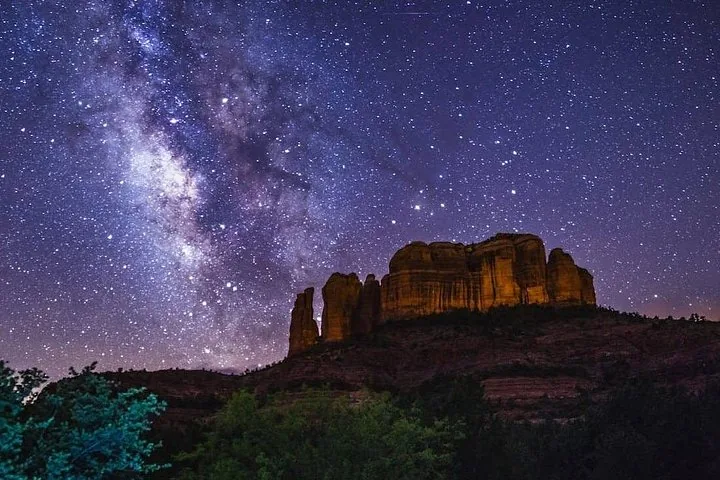
From the last-quarter moon to about four days after the new moon. In that stretch the moon is either not up yet or sets soon after sunset.
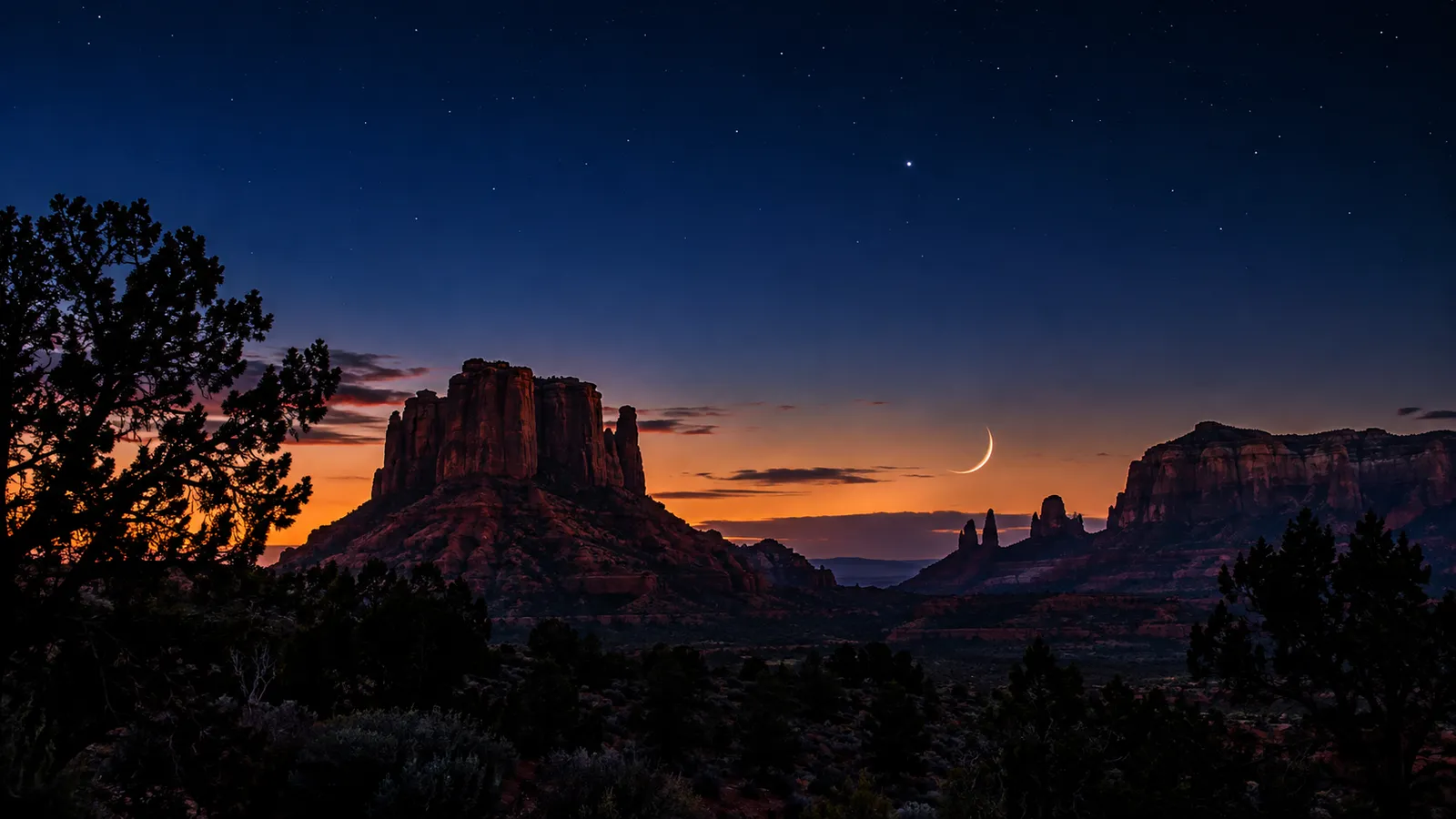
After the last quarter, the moon rises around midnight and later each night, so evening tours have a dark sky. Around the new moon there's no moon at all. For a few days after it, a thin crescent sets early in the evening. That gives you the windows in the table: about twelve nights a month.
Inside that window, pick the earliest start time if you have kids, and the later one if you want the darkest sky. The flagship's times change by season: 7:30 and 9 pm from November to April, according to the operator.
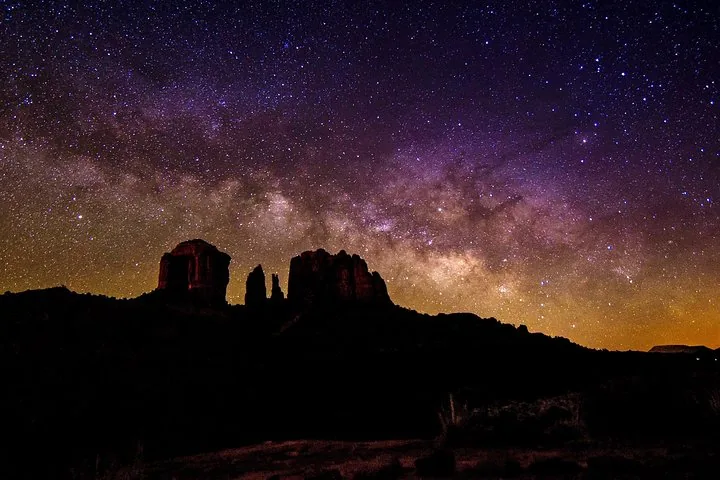
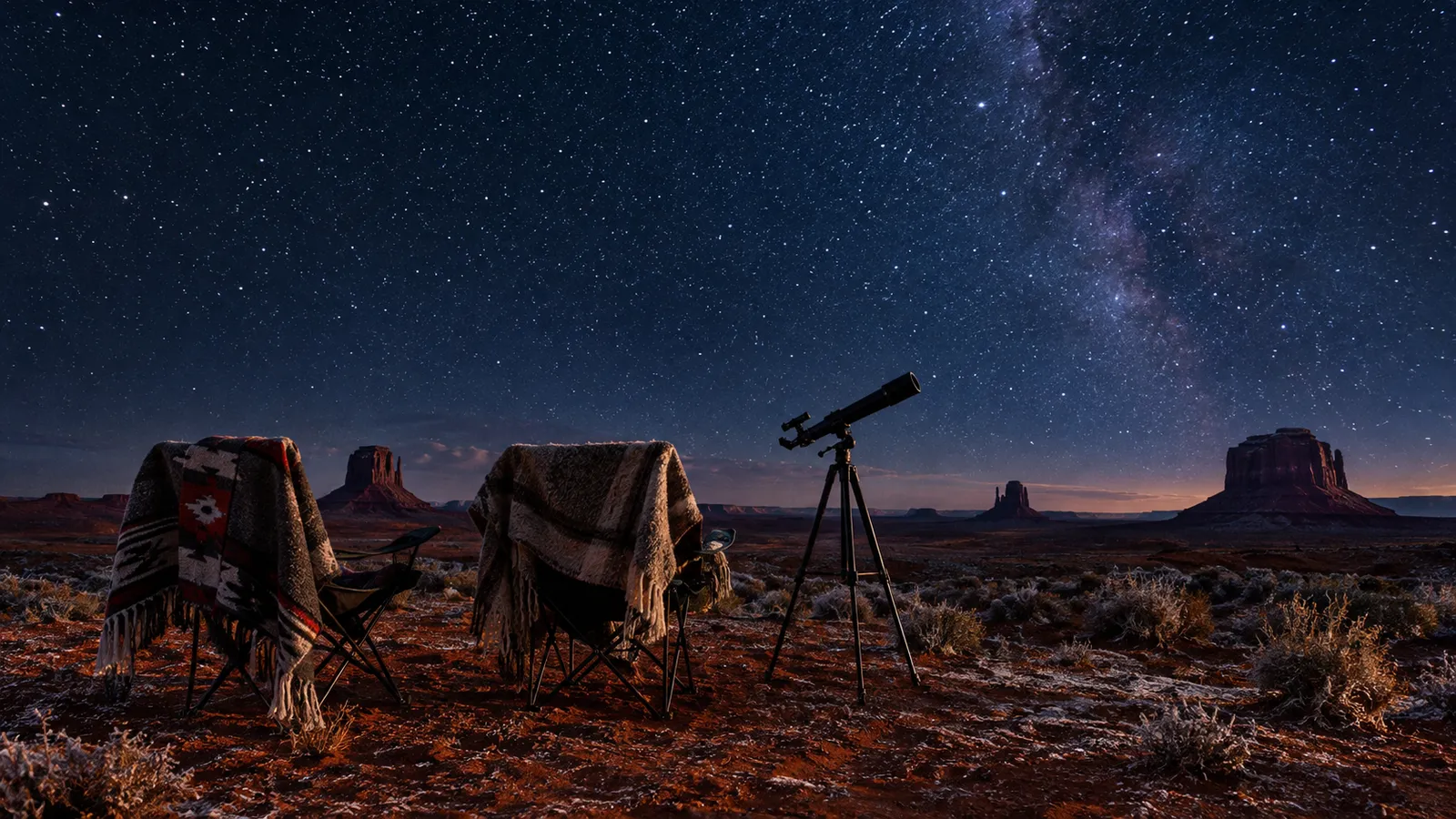
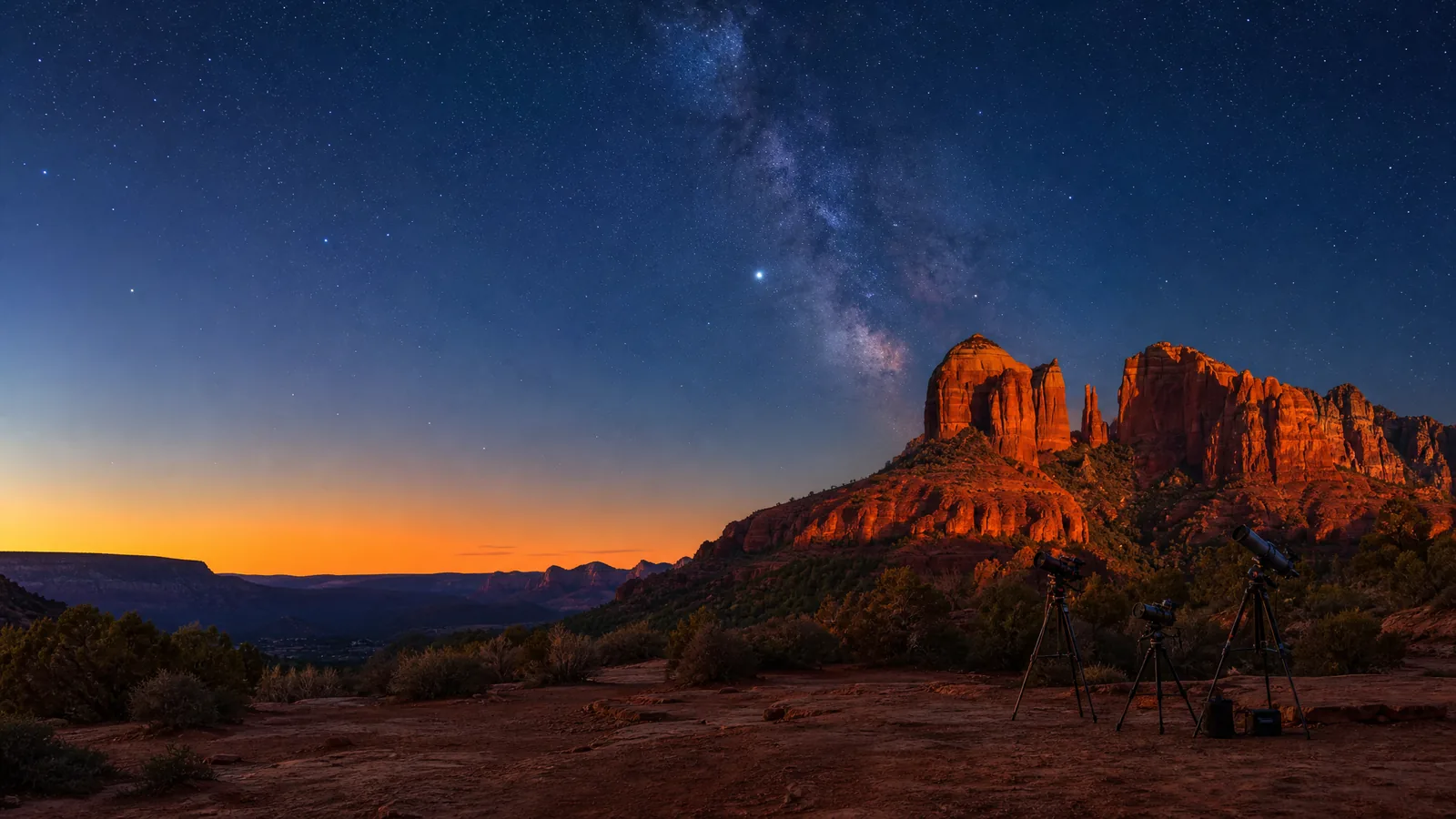
Large GPS telescopes, astronomers, parkas and chairs near the Village of Oak Creek. Book it for a night inside the dark window.
Explore the flagship telescope tour Tour detailsWhich Sedona tour still works under a full moon?
A telescope tour, because the moon and planets are bright enough to shine through moonlight. Naked-eye story tours and goggle tours lose the most.
Through a telescope, the moon's craters and mountains are a highlight in their own right, and bright planets cut through moonlight. Faint objects are what you lose. The Night Sky Star Story tour has no telescopes, so a bright moon hides much of what the stories are about. The original UFO tour doesn't operate during or around the full moon at all, per its listing. One guest on the private jeep tour saw few stars under a super full moon but still enjoyed the ride.
| Tour | On a full-moon week | Dark-window pick? |
|---|---|---|
| Flagship telescope tour | Runs; the moon is a target | Yes |
| Small-group telescopes | Runs; faint deep-sky targets suffer | Yes |
| Star story tour | Runs; fewer stars to tell stories about | Strongly |
| UFO night tour | Does not run around the full moon | Only option |
| Private jeep tour | Runs; the ride carries it | Yes |
What if it's cloudy on your night?
Every tour here needs good weather. If the operator cancels, Viator offers another date or a full refund.
Moon dates are fixed; clouds are not. Book early in a dark window so a cancelled night can move to another dark night. Direct bookings on the flagship are rescheduled when space allows, with a 100% refund if not, according to the operator.
For the full month-by-month picture, read our guide to the best time for stargazing in Sedona, and check this season's meteor showers before you choose a date.
Book a night inside the dark window, with free cancellation up to 24 hours before.
Check dates for the flagship telescope tourFrequently asked questions
When is the next full moon in Sedona?
Sunday October 25, 2026 at 9:12 pm Arizona time, then Tuesday November 24 at 7:53 am.
When is the next new moon in Sedona?
Monday November 9, 2026, just after midnight Arizona time, then Tuesday December 8 at 5:52 pm.
Do Sedona stargazing tours run on a full moon?
Most do. The telescope tours look at the moon and planets. The original UFO tour does not run during or around the full moon.
Does Arizona change the clocks?
No. Arizona stays on Mountain Standard Time all year, so moon times and tour times don't shift in March or November.
Ready to book
Choose your night
Free cancellation up to 24 hours before on every option. Prices are from-prices in USD and move with the season.
Sedona Stargazing Tour
- Constellation overview with a laser pointer
- Turns at large GPS auto-positioning telescopes: planets, galaxies, nebulas, star clusters
- Wide-view binoculars and a chair between turns
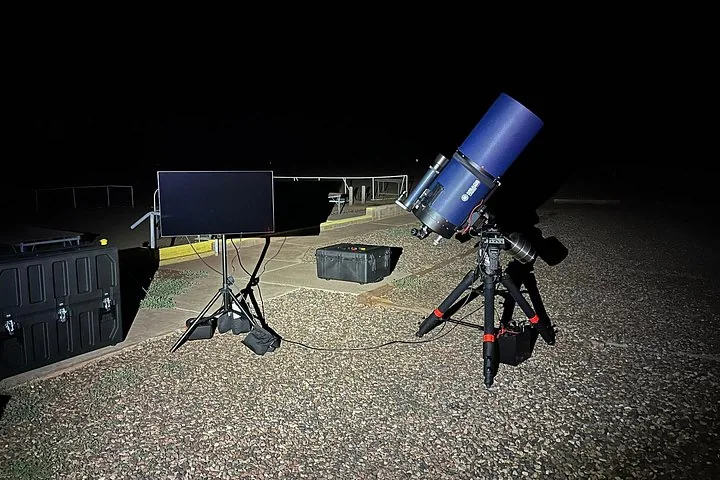
Small-Group Stargazing with Telescopes
- Large-aperture telescopes with premium eyepieces
- Live views of deep space on a 4k monitor
- Groups of up to twelve
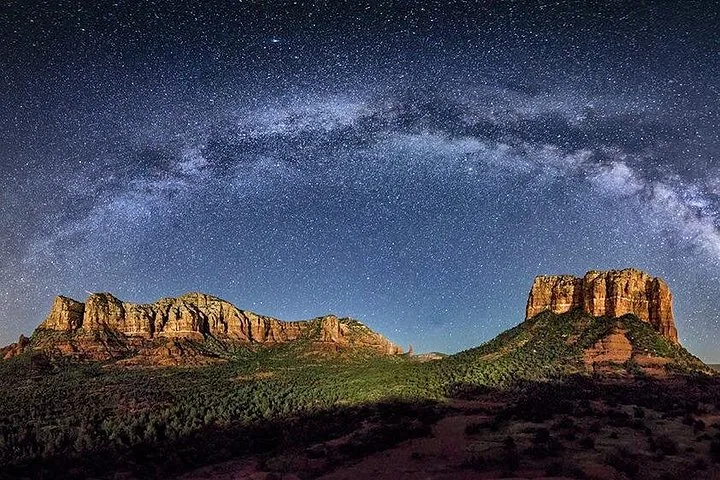
Night Sky Star Story & Galaxy Tour
- Constellation stories with a laser pointer and planisphere
- Big-screen constellation images and hands-on visuals
- Chairs and blankets