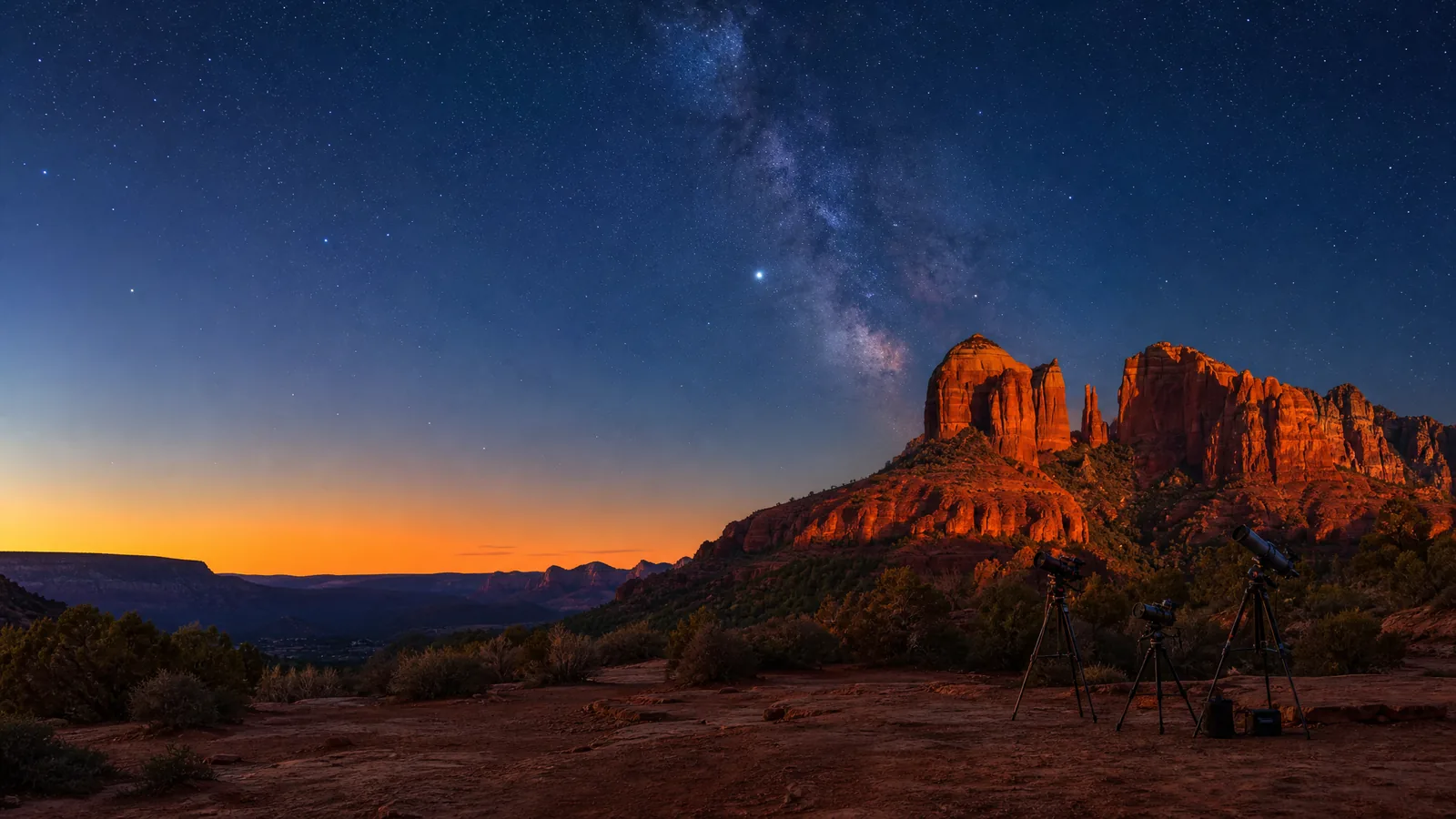
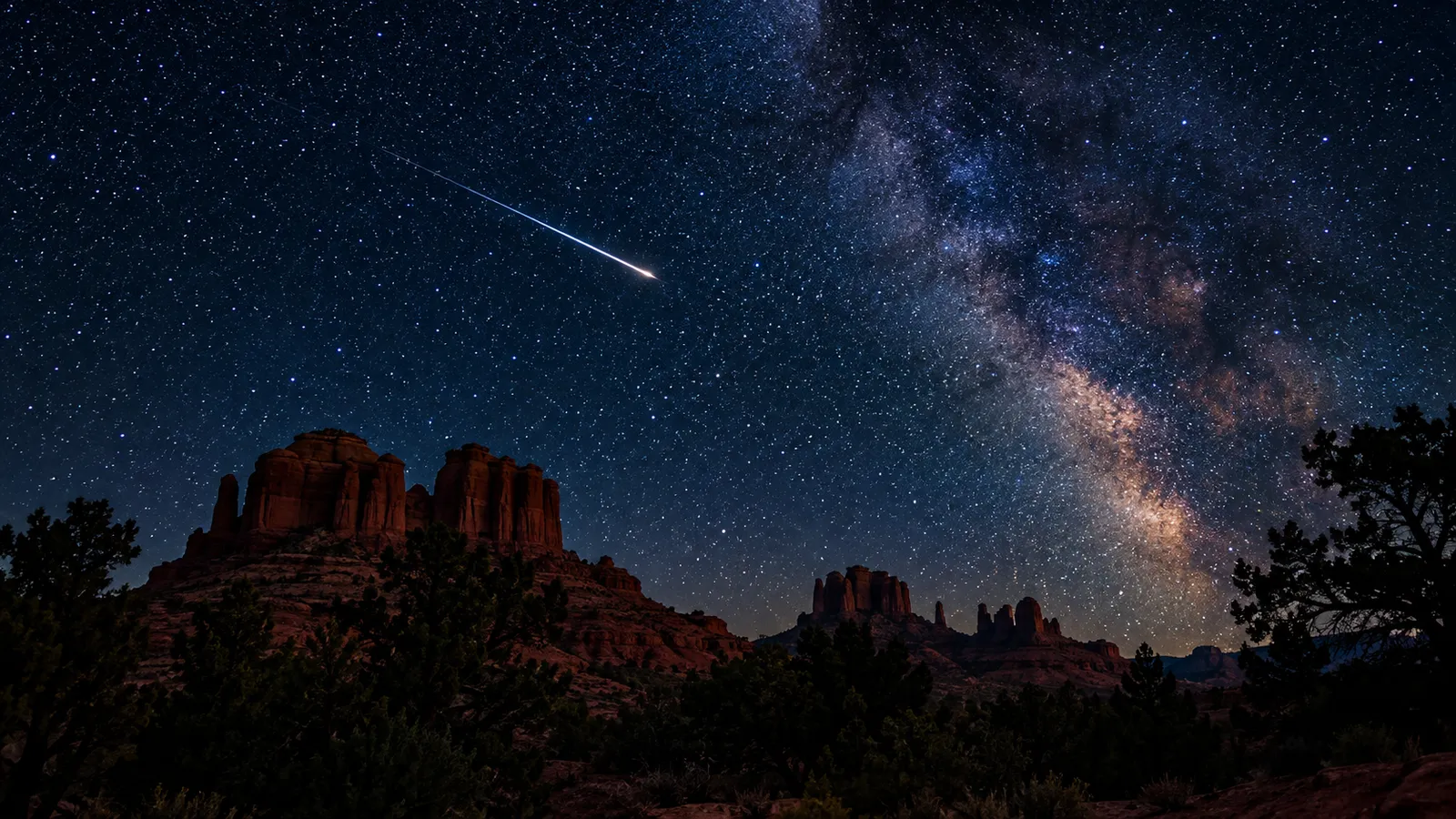
Booking choice: The flagship telescope tour, from $127 per person. Check dates Tour details
A meteor shower is not a show that starts on cue. It is a few bright streaks an hour, more after midnight for most showers, and far fewer when the moon is up. The figures below come from the American Meteor Society's 2026-27 calendar, which lists each shower's activity period, peak night and the moon at the peak.
Stargazing tours in Sedona are evening events: the flagship's last start is 9 pm from November to April. A tour won't give you the pre-dawn peak hours of most showers. It can give you a dark site, chairs, and astronomers who will spot meteors with you between telescope turns.
The quick answer
The Geminids, peaking the night of Dec 13 to 14 with a 15% moon, are the shower to plan a Sedona tour around: the AMS says they give good activity before midnight. The Northern Taurids (Nov 11 to 12) peak under a 4% moon. The Orionids (Oct 21 to 22) and Ursids (Dec 21 to 22) peak under a bright moon.
Which meteor showers peak over Sedona in 2026-27?
Six between October and early January: the Orionids, both Taurid branches, the Leonids, the Geminids, the Ursids and the Quadrantids.
The moon column matters more than the rate. A 75% moon can hide most of a shower's fainter meteors. Peak nights are listed as the night that spans both dates.
| Shower | Active | Peak night | Moon at peak | AMS note |
|---|---|---|---|---|
| Orionids | Oct 2 to Nov 7 | Oct 21 to 22 | 74%, waxing gibbous | 10 to 20 per hour at best |
| Southern Taurids | Sep 20 to Nov 20 | Nov 4 to 5 | 25%, waning crescent | Limited moonlight interference |
| Northern Taurids | Oct 20 to Dec 10 | Nov 11 to 12 | 4%, waxing crescent | Little or no moonlight interference |
| Leonids | Nov 6 to 30 | Nov 16 to 17 | 39%, waxing crescent | Over 100 per hour in good years |
| Geminids | Dec 4 to 17 | Dec 13 to 14 | 15%, waxing crescent | Usually the strongest of the year |
| Ursids | Dec 17 to 26 | Dec 21 to 22 | 89%, waxing gibbous | 5 to 10 per hour |
| Quadrantids | Dec 28 to Jan 12 | Jan 3 to 4, 2027 | 18%, waning crescent | Average rate about 25 per hour |
When are the Geminids in 2026, and can you see them on a tour?
The Geminids peak the night of December 13 to 14, 2026, with the moon only 15% lit. They are the one major shower that is active before midnight.
The AMS calls the Geminids usually the strongest meteor shower of the year, and notes that they provide good activity before midnight. That's the key for Sedona tours, which finish by about 10:15 pm in winter. The crescent moon on Dec 13 sets early, too.
Book the flagship telescope tour on Dec 12, 13 or 14 and take the later 9 pm start. The star story tour is a good alternative: it starts at 7:30 pm, lasts two hours, and keeps your eyes on the open sky, not an eyepiece.
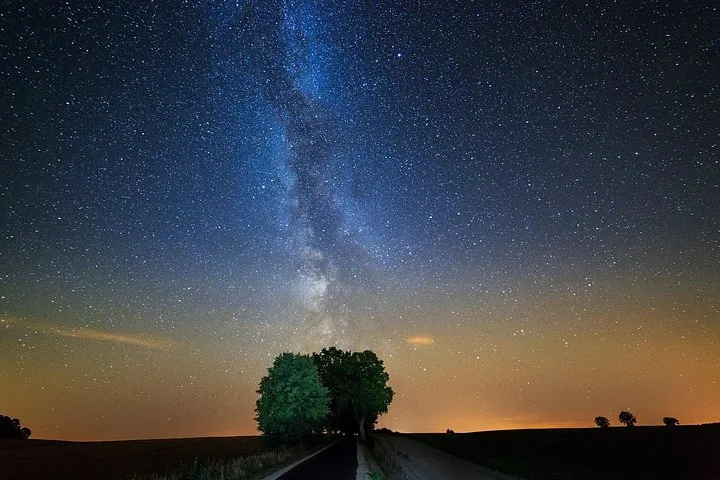
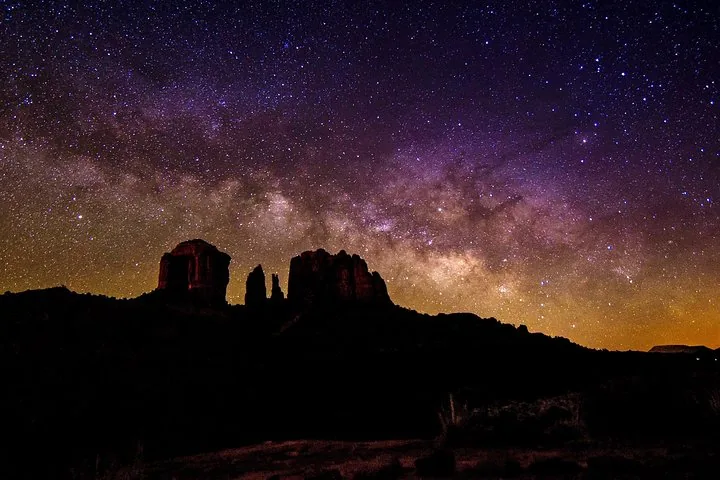
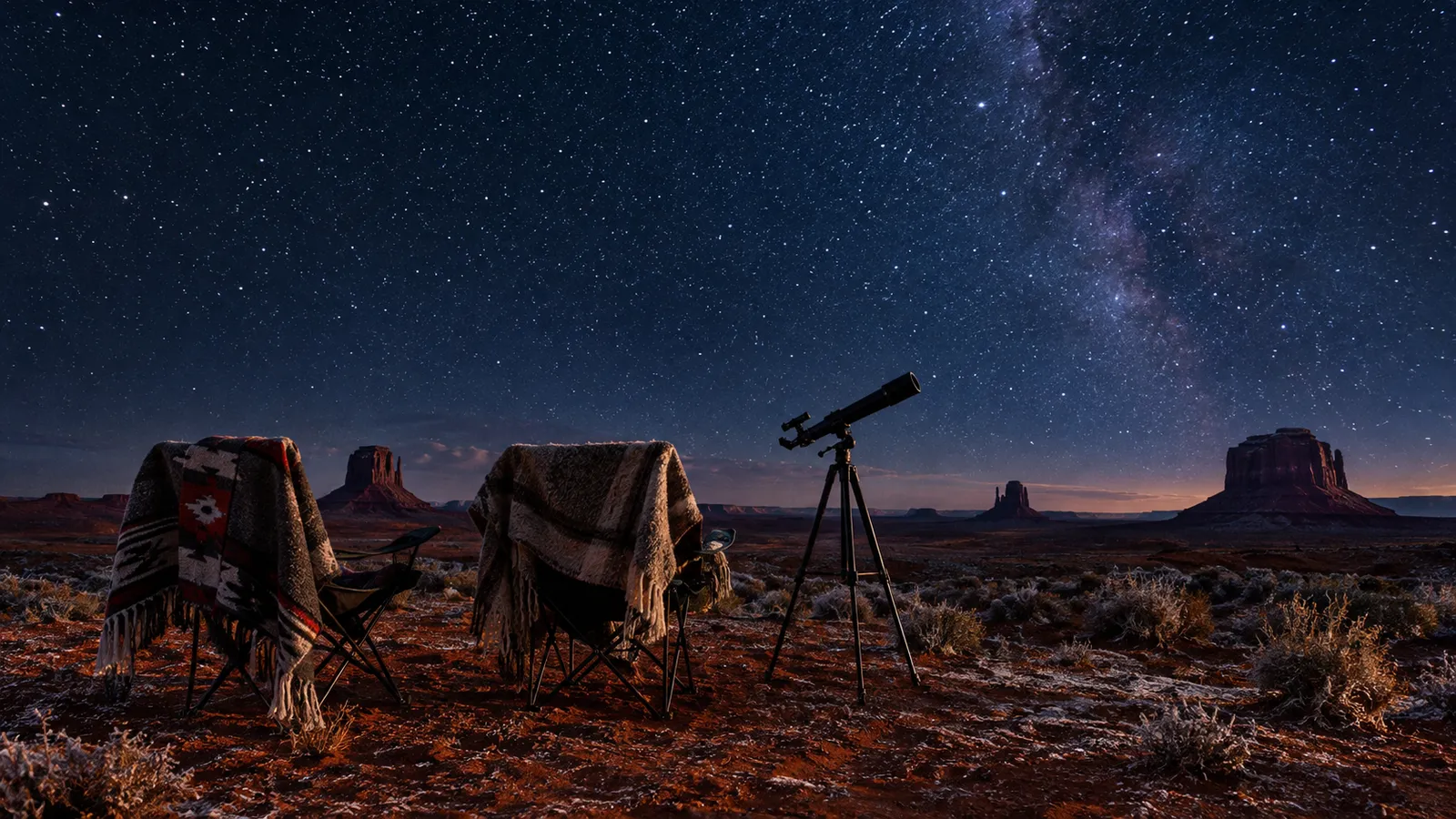
Big telescopes, binoculars and chairs at a dark field near Oak Creek. Book Dec 13 for the Geminid peak.
Explore the flagship telescope tour Tour detailsAre the Orionids worth it in October 2026?
Only for patient watchers. They peak on the night of October 21 to 22 with the moon 74% lit, and the AMS expects significant moonlight interference.
The Orionids usually give 10 to 20 meteors an hour at best, and that's under a dark sky. With a waxing gibbous moon up in the evening, a tour on Oct 21 sees a bright sky and few meteors. It is also the stretch just before the Oct 25 full moon that the flagship operator advises skipping. Book the telescope tour on its merits that week, and treat any meteor as a bonus.
Our Sedona moon calendar shows the dark windows either side.
What about the Taurids and Leonids in November?
The Northern Taurids peak on November 11 to 12 under a 4% moon, inside the darkest window of the month. The Leonids follow on November 16 to 17 with the moon 39% lit.
The Taurids are low-rate showers with a long season: the southern branch runs from late September to late November. Their value in 2026 is timing: the Northern peak lands three nights after the Nov 9 new moon, when an evening tour has a dark sky anyway. The AMS lists very favorable lunar conditions.
The Leonids reach rates over 100 per hour only in good years, and the AMS warns that moonlight may hide fainter meteors while the moon is up. A clear evening around Nov 11 is the better tour night: dark sky, Taurids in the background, and telescopes for everything else.
A dark November evening at the telescopes, with free cancellation up to 24 hours before.
Check dates for the small-group telescope tourHow do you watch a meteor shower in Sedona on your own?
Pick a dark pull-off away from town lights, give your eyes 20 minutes, lie back and look about halfway up the sky. Dress for winter.
Sedona is an International Dark Sky Community, which helps. Get away from the lights of Uptown and West Sedona and the sky is dark enough for faint meteors. The cold is the bigger problem in December and January: average lows near 31°F, according to the Western Regional Climate Center. Our what to wear for stargazing in Sedona guide covers layers.
For the Quadrantids on Jan 3 to 4, the AMS notes that this year's peak favors Europe and western Asia. Sedona will see some, but the Geminids remain the shower to plan a trip around.
Frequently asked questions
When is the best meteor shower to see from Sedona in 2026?
The Geminids, peaking the night of December 13 to 14 with a 15% moon. They are active before midnight, which suits evening tours.
Will I see meteors on a Sedona stargazing tour?
On a clear night you may see a few at any time of year, and more near a shower peak. Tours are built around telescopes, not meteor counts.
Is the moon a problem for the Orionids in 2026?
Yes. The moon is 74% lit on the Oct 21 to 22 peak, and the AMS expects significant interference while it is up.
What time should I watch a meteor shower?
For most showers, after midnight. The Geminids are the exception: they give good activity before midnight too.
Ready to book
Choose your night
Free cancellation up to 24 hours before on every option. Prices are from-prices in USD and move with the season.
Sedona Stargazing Tour
- Constellation overview with a laser pointer
- Turns at large GPS auto-positioning telescopes: planets, galaxies, nebulas, star clusters
- Wide-view binoculars and a chair between turns
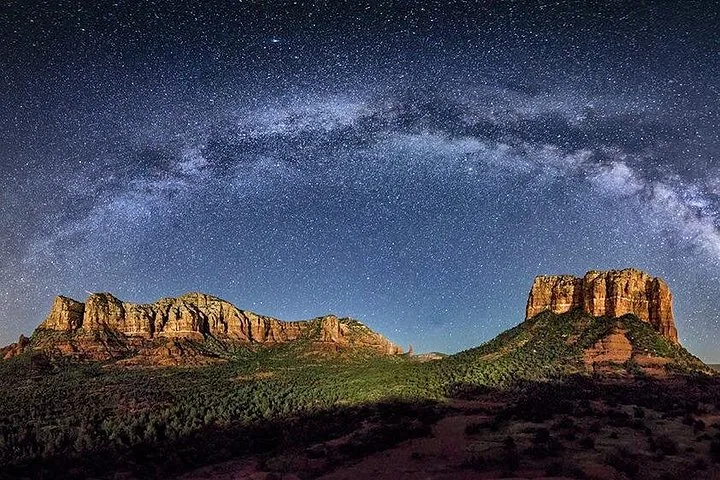
Night Sky Star Story & Galaxy Tour
- Constellation stories with a laser pointer and planisphere
- Big-screen constellation images and hands-on visuals
- Chairs and blankets
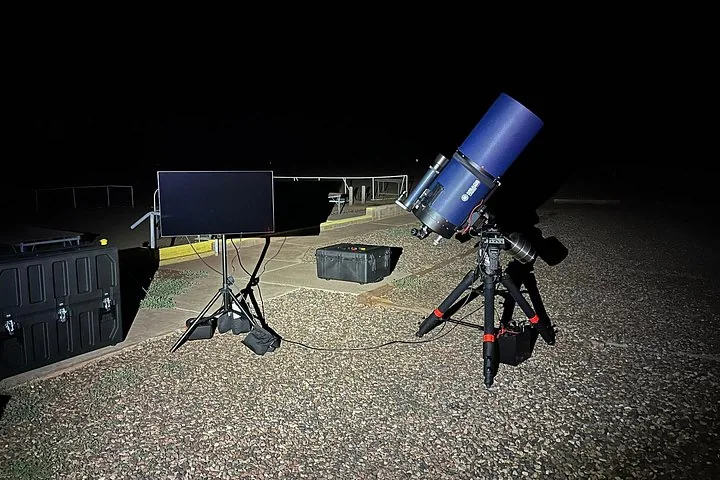
Small-Group Stargazing with Telescopes
- Large-aperture telescopes with premium eyepieces
- Live views of deep space on a 4k monitor
- Groups of up to twelve